How to Design a Play Space That Encourages Independent Play
Many parents assume independent play is something children simply learn with age. If their toddler only seems happy playing when they’re sitting right beside them, it’s easy to conclude that they’re simply “clingy” or not interested in playing alone.
Imagine if you had to ask someone every time you wanted to make yourself a cup of tea. The mugs were on a high shelf, the kettle was locked away and someone else decided which tea you could choose. You’d probably stop doing it independently and simply wait for help.
Toddlers experience something similar. When toys are difficult to reach, choices feel overwhelming or activities require constant adult help, it’s only natural that they turn back to the person who makes everything easier:
you.
This is one of the key ideas behind the Montessori approach. Rather than entertaining children with more toys or constant interaction, Montessori focuses on removing the small obstacles that interrupt concentration and independence.
Often, the biggest difference comes from surprisingly simple changes:
- Low, open shelves
- A small number of carefully chosen toys
- Child-sized furniture
- Clearly defined play areas
- Calm, uncluttered surroundings
None of these changes are complicated, but together they create a space that quietly invites children to explore, focus and play independently.
Adding more toys rarely solves the problem. In fact, many families notice the opposite. When the play area becomes calmer, more organised and easier to understand, children often settle into play for much longer.
Independent play doesn’t usually grow from having more to do.
It grows from having less to think about.
Disclaimer: As an Amazon Associate I earn from qualifying purchases.
Independent Play Begins Long Before a Child Picks Up a Toy
One of the biggest surprises for many parents is that independent play is rarely determined by the toy itself.
Instead of asking:
“Which toy will finally keep my toddler occupied?”
Montessori encourages us to ask:
“Does my child have a play space that makes independent play feel easy?”
When toys are easy to see, easy to reach and easy to put away again, toddlers are far more likely to choose an activity confidently without constantly looking to an adult for help.
The ideas below aren’t magic solutions. They simply remove many of the small obstacles that make independent play harder than it needs to be.
1. Create a Defined Play Space
Sometimes the most effective Montessori “tool” isn’t a toy at all—it’s a clear sense of place.
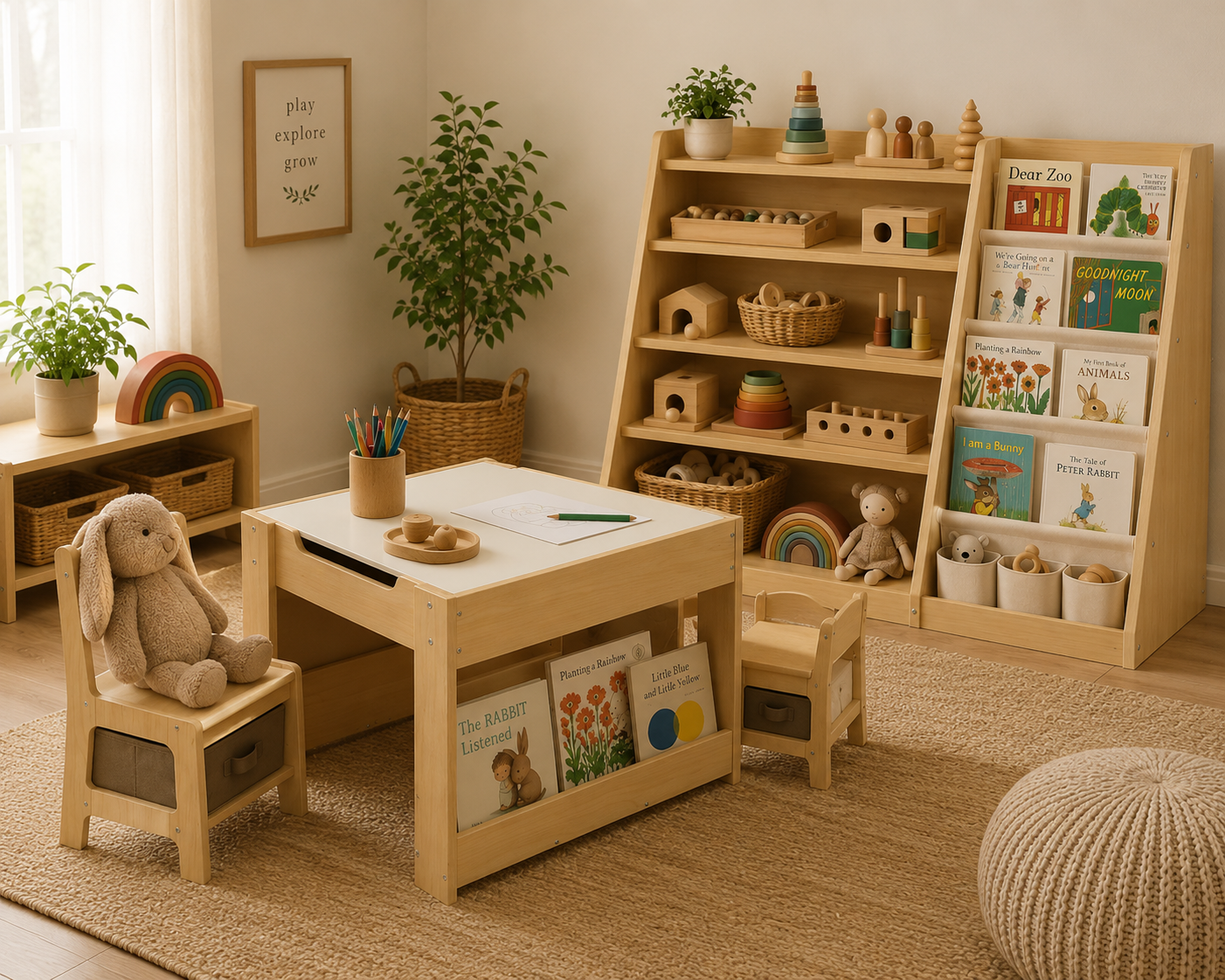
Young children naturally respond to gentle boundaries. A small rug, floor mat or dedicated corner quietly signals where play belongs, making it easier for toddlers to settle into an activity without becoming distracted by the rest of the room.
That simple sense of structure often encourages longer periods of focus. Instead of moving aimlessly between toys, children can concentrate on what’s right in front of them.
The goal isn’t to create a picture-perfect playroom.
It’s simply to create a space that feels calm, familiar and inviting.
In many homes, that can be as simple as a low shelf, a soft rug and a handful of thoughtfully chosen activities. These small, uncluttered setups often encourage much deeper concentration than rooms filled with endless toys and constant choice.
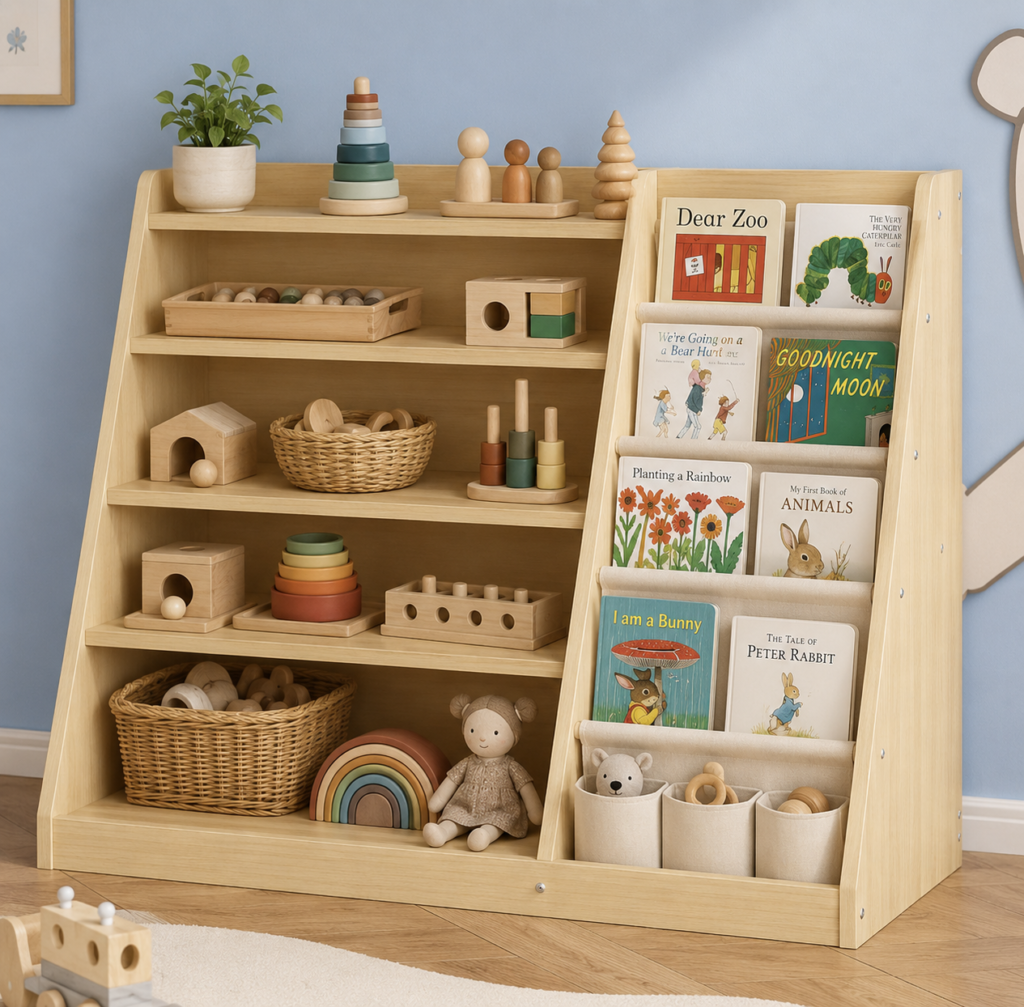
2. Low Open Shelves: The Heart of a Montessori Play Space
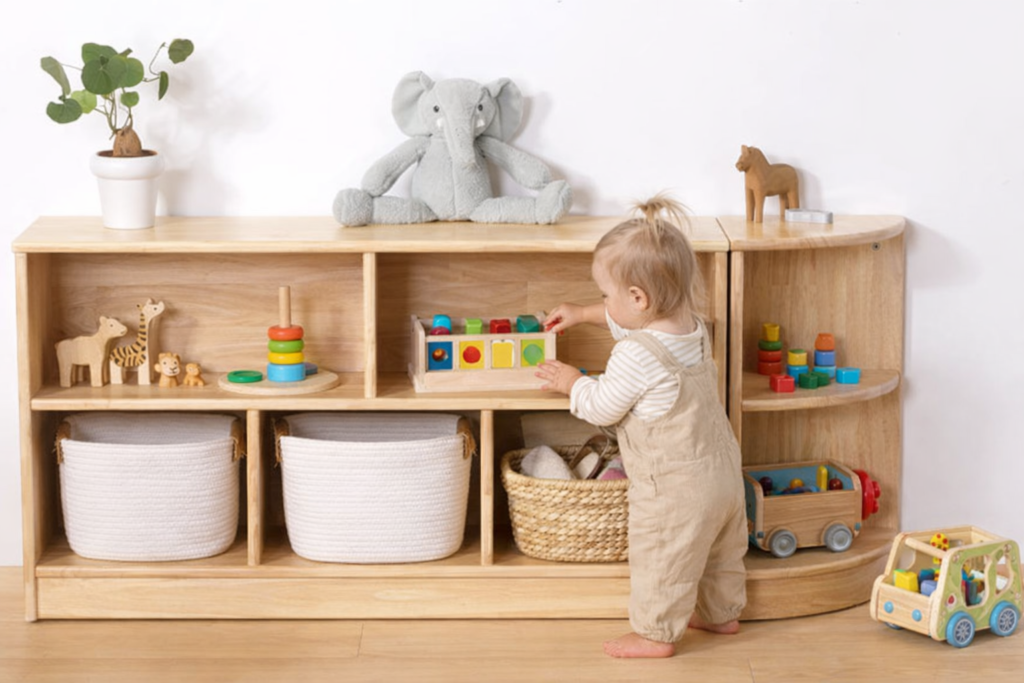
If there is one change that consistently transforms the way toddlers use their play area, it’s open shelving.
Many children are surrounded by toys but can’t easily see or reach them. Favourite activities become buried in toy boxes, mixed together or forgotten altogether.
Open shelves make choosing much simpler.
View Rubber Wood Montessori Shelf
Instead of searching through piles of toys, toddlers can immediately see what’s available, make a choice independently and begin playing without waiting for adult help.
Interestingly, many parents notice that fewer visible toys actually lead to more focused play. A shelf displaying four carefully chosen activities often encourages much deeper concentration than a room filled with dozens of options.
A simple, toddler-height shelf keeps materials visible, accessible and easy to return, helping children develop confidence and independence one activity at a time.
3. Child-Sized Furniture
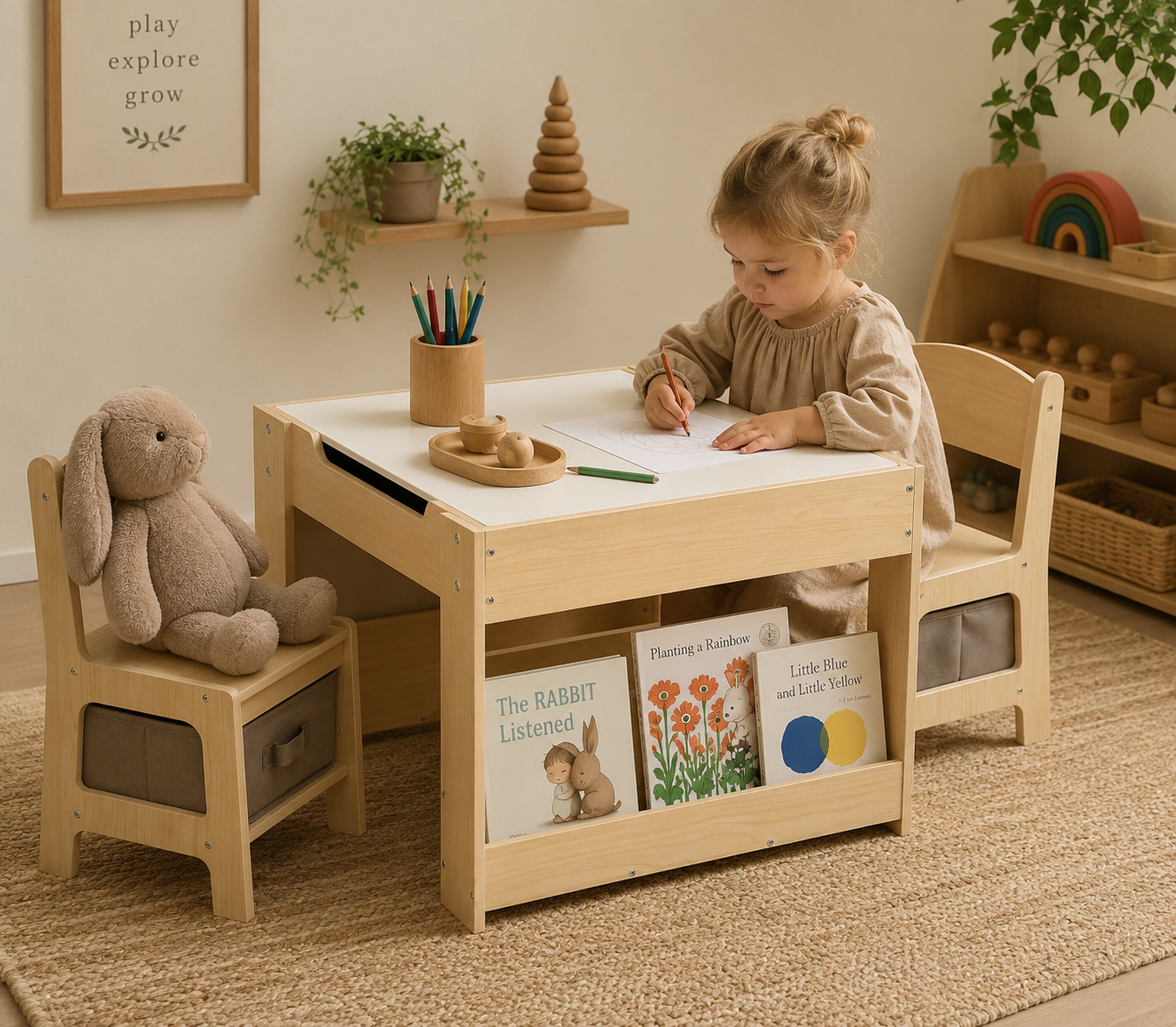
Have you ever noticed how much easier it is to focus when you’re comfortable? Toddlers are no different.
A chair that is too high, a table that feels unstable or shelves they cannot comfortably reach all create small frustrations that gradually interrupt focus.
Child-sized furniture removes some of that friction.
A small table and chair can make independent activities feel more manageable because the child can sit, reach and work comfortably without constant adjustment or adult help.
When the body feels more secure in the environment, concentration often lasts longer too.
Simple wooden furniture with a stable, grounded feel often works especially well in Montessori spaces because it feels easier for toddlers to use confidently and independently without adding unnecessary visual stimulation.
View Toddler Activity Desk and Chair Set
4. Choose Simple, Open-Ended Materials
When it comes to encouraging independent play, simpler is often better.
The toys that hold a toddler’s attention the longest are rarely the ones with flashing lights, music or dozens of buttons. More often, they’re the materials that leave room for children to think, experiment and discover things for themselves.
This is why Montessori spaces tend to favour open-ended activities that can be enjoyed in different ways as a child grows.
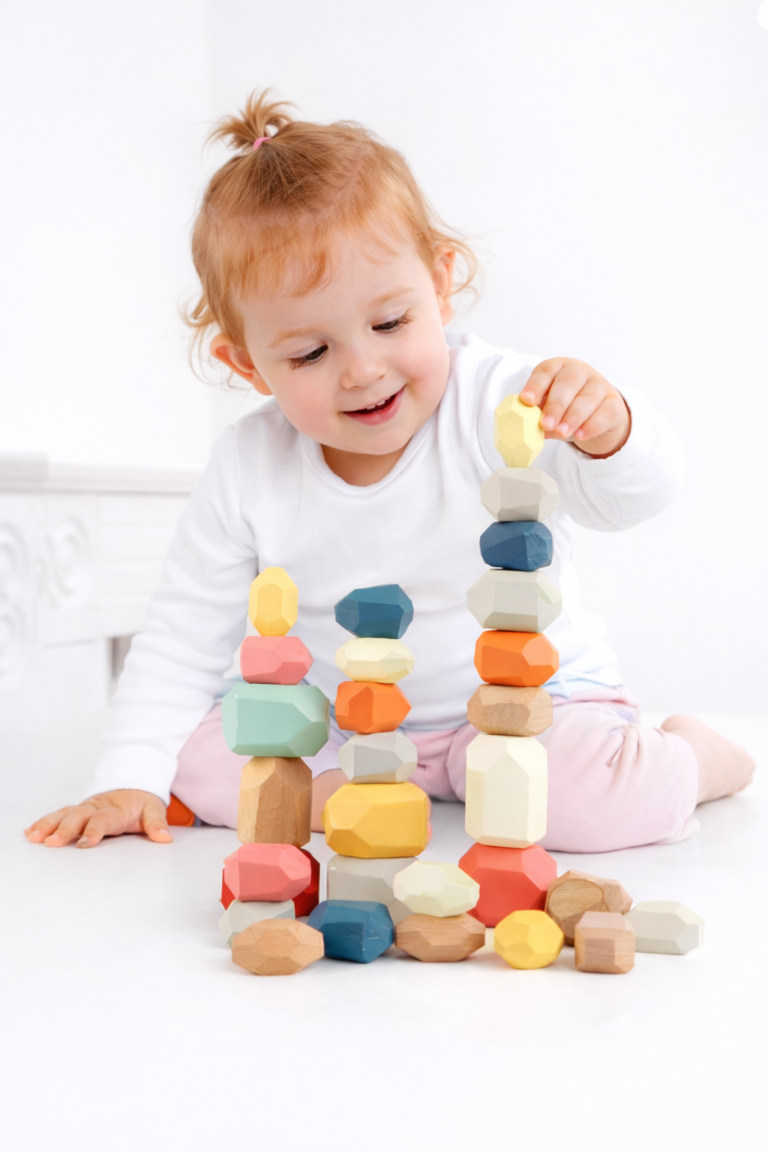
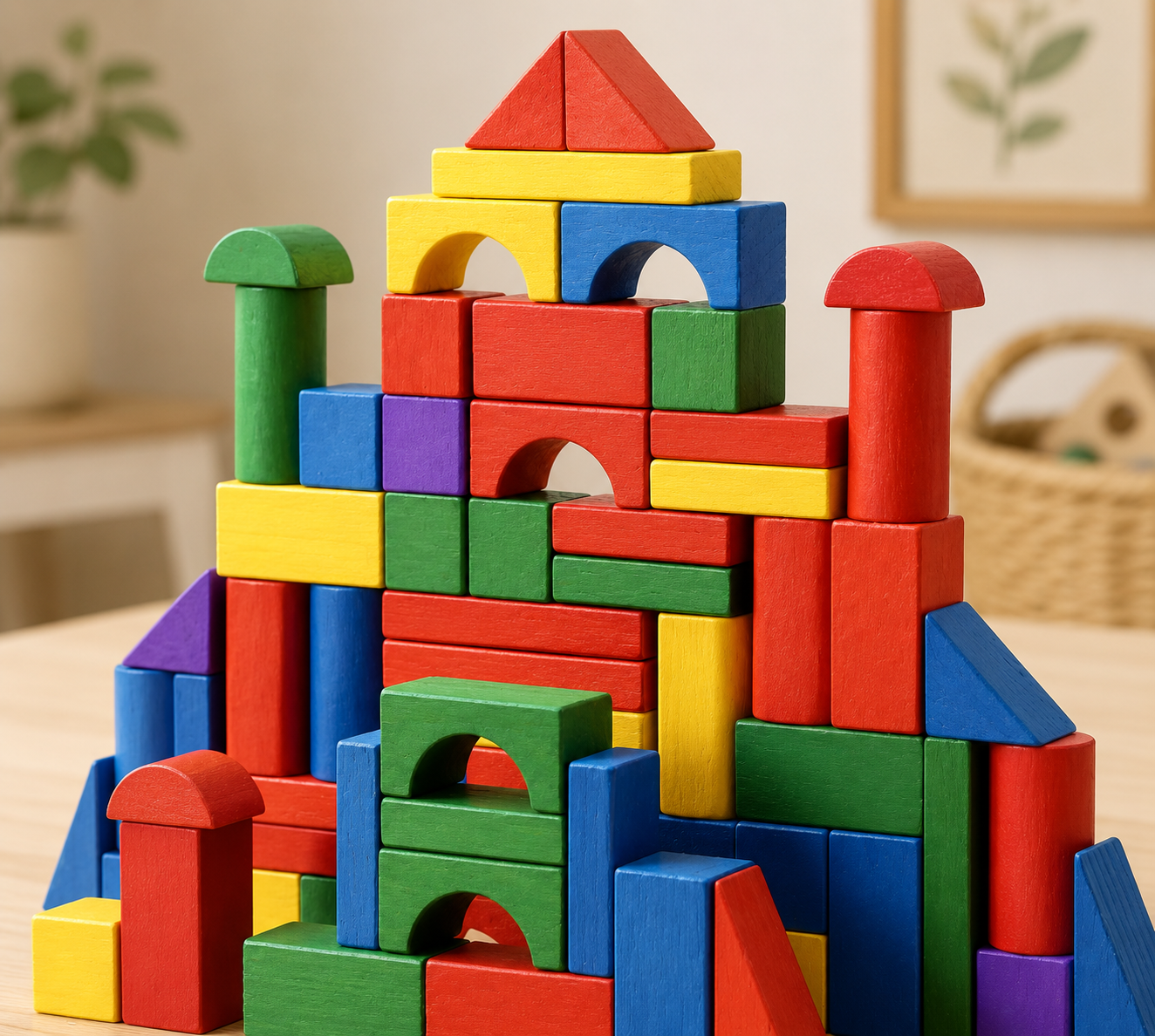
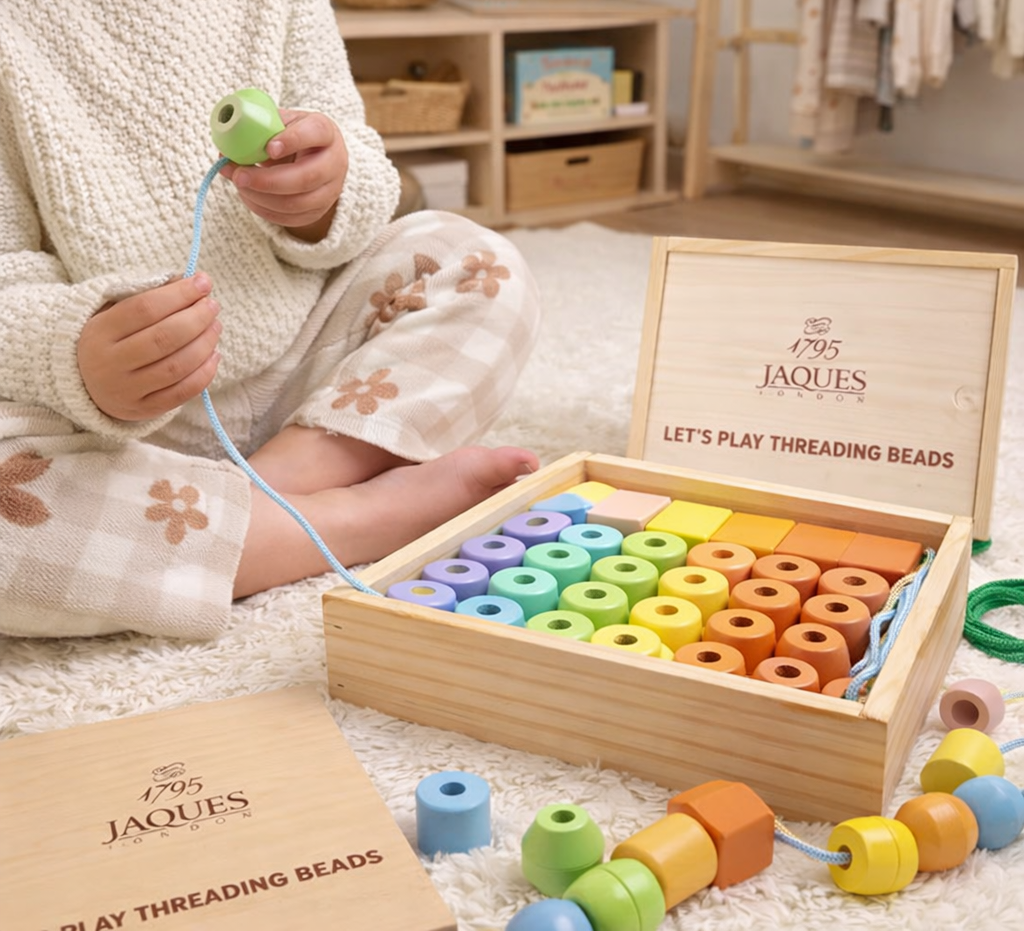
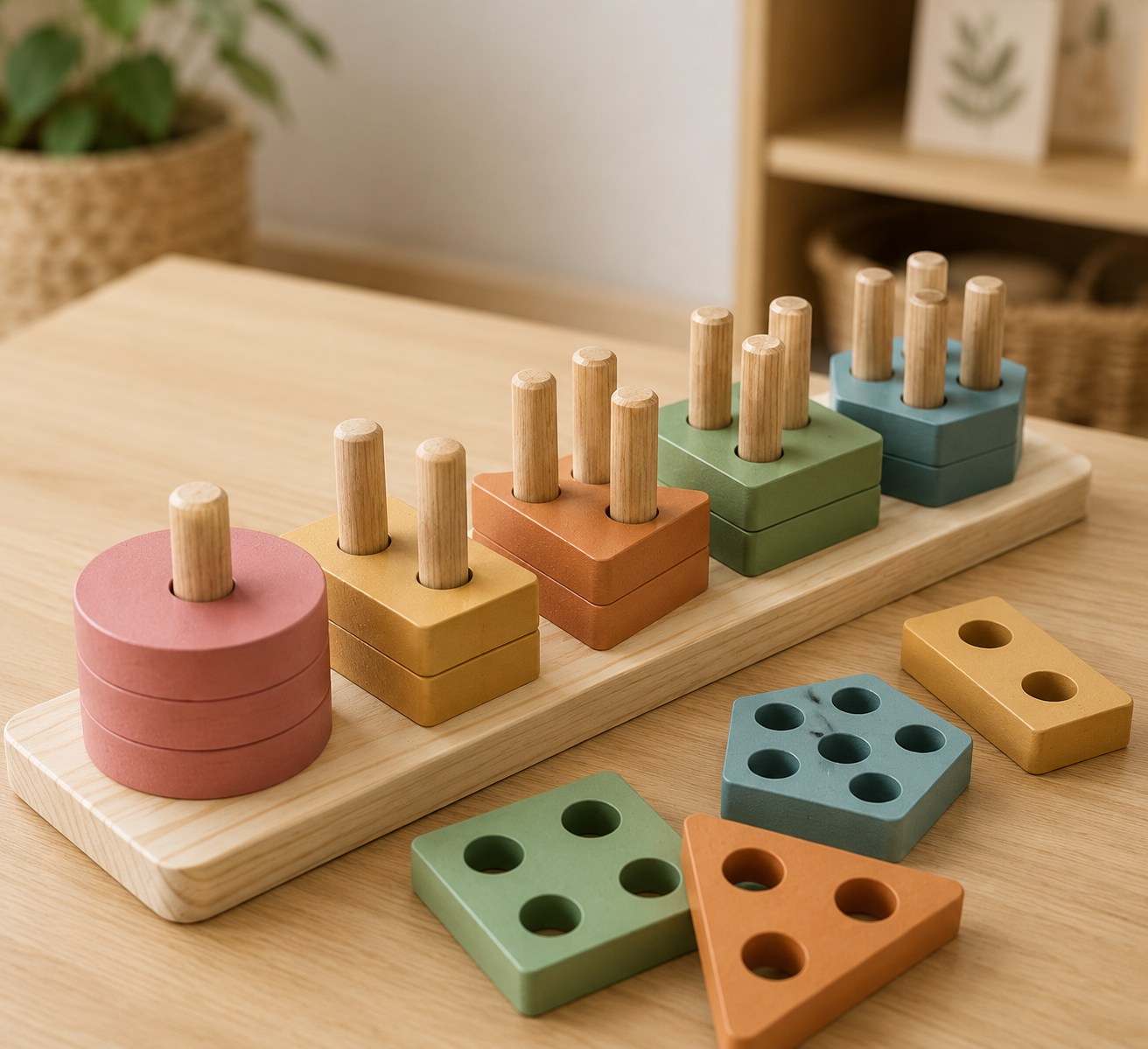
Stacking toys, threading beads, posting activities, simple puzzles and practical life trays all have a clear purpose without being overly prescriptive. Rather than entertaining children for them, they invite toddlers to solve small problems, repeat familiar movements and gradually build confidence through practice.
Another advantage is that these activities don’t lose their appeal after a single use. As concentration, coordination and fine motor skills develop, children often return to the same materials again and again, discovering new ways to use them each time.
We particularly like toys that feel calm, tactile and intuitive to use. They encourage focused, hands-on play without competing for a child’s attention, making it much easier for concentration to develop naturally.
Recommended: Simple wooden blocks, wooden threading beads or stacking toys that support fine motor skills and can be enjoyed in different ways as your toddler grows.
If you’re looking for more simple, purposeful materials, see:
→ Montessori toys for 1 year olds
→ Best Montessori Toys for 2 Year Olds That Build Focus & Independent Play
For children who benefit from additional sensory input, certain materials can also support focus and regulation. These sensory toys therapists recommend for autistic children aged 3+ can be especially helpful.
5. Limit Visible Toys
It’s easy to assume that more toys will keep toddlers engaged for longer.
In reality, the opposite is often true.
When too many activities compete for a child’s attention, choosing what to play with can feel overwhelming. Instead of settling into one activity, many toddlers move quickly from toy to toy or look to an adult for direction.
Offering fewer choices often leads to deeper, more independent play.
This is why many Montessori families rotate toys—not to create constant novelty, but to keep the play space calm, organised and easy to navigate.
With just a handful of carefully chosen activities available, toddlers are more likely to:
- Stay with one activity for longer
- Repeat skills through purposeful practice
- Move more calmly between activities
We’ve found that storing most toys out of sight encourages children to explore what’s already in front of them rather than constantly searching for something new.
If your toddler frequently interrupts play to ask when you’ll be finished or what happens next, a simple visual timer can also help. Our guide to When and How to Use Visual Timers for Toddlers explains how to introduce one in a gentle, age-appropriate way.
Final Thoughts
Independent play is rarely created by toys alone.
More often, it grows from a play space that feels calm, inviting and easy for a child to use with confidence.
When toddlers can see their choices clearly, reach what they need and return to familiar activities without constant help, concentration often begins to develop naturally.
And perhaps most importantly, independent play doesn’t need to look impressive to be valuable.
At first, it may simply look like:
- Stacking the same blocks over and over
- Repeating a posting activity for ten minutes
- Quietly turning the pages of a favourite book
- Returning to the same familiar task day after day
From an adult’s perspective, that repetition can seem uneventful.
For a toddler, it’s often where the real learning begins.
Each repeated movement strengthens coordination. Each successful attempt builds confidence. And every moment of uninterrupted focus lays another small foundation for future independence.
That’s why Montessori play spaces are often surprisingly simple.
Fewer toys.
Clearer choices.
More room to concentrate.
Not because minimalism is the goal, but because simplicity allows children to focus on what really matters.
The aim isn’t simply to keep toddlers occupied for twenty minutes.
It’s to create a space that quietly says:
“You can do this.”
And over time, your child begins to believe it too.
FAQs
Do toddlers need Montessori toys to play independently?
No. Independent play is influenced far more by how toys are presented than by whether they’re labelled as Montessori.
A small number of simple, accessible materials in a calm, organised play space usually supports concentration much better than shelves full of expensive toys.
How long should toddlers play independently?
It varies by age and temperament.
For many toddlers, 5–10 minutes of focused play is already a great starting point. As concentration, confidence and familiarity with the play space grow, those periods often become longer naturally.
Why does my toddler lose interest so quickly?
Losing interest quickly doesn’t always mean your toddler is bored.
Sometimes there are simply too many choices, too many distractions or activities that feel difficult to use without adult help. Simplifying the play space often has a much bigger impact than buying new toys.
What kinds of toys encourage independent play?
Open-ended materials tend to support independent play best because children can return to them again and again in different ways.
Simple puzzles, stacking toys, threading beads, posting activities and practical life materials all encourage repetition, problem-solving and concentration without needing constant adult direction.
Should all of my toddler’s toys be available at once?
Usually not.
Displaying a smaller selection of toys often helps toddlers concentrate for longer because choosing feels simpler and less overwhelming. Many Montessori families rotate toys every few weeks while keeping familiar favourites available.
What if my toddler always wants me to play too?
That’s completely normal.
Independent play develops gradually and usually begins with a parent nearby. Sitting quietly alongside your toddler while they play can provide the reassurance they need until they’re ready to stay engaged without constant interaction.
Can independent play be encouraged without screens?
Absolutely.
Many toddlers become deeply engaged with slower, hands-on activities that they can repeat at their own pace. Building blocks, puzzles, practical life activities and open-ended materials often hold attention for much longer than parents expect.
You Might Also Find Helpful