
How to Choose Sensory Toys for Neurodivergent Toddlers
Many parents start looking for sensory toys after noticing certain behaviours.
A child may constantly seek movement, chew clothing, cover their ears in busy places or seem particularly drawn to certain textures, sounds or visual experiences.
It’s natural to wonder whether a sensory toy might help.
The challenge is that there is no single sensory toy that works for every child. What feels calming and engaging for one child may feel overwhelming or uninteresting to another.
Research¹ supports this individual approach. In a study of autistic children using a multi-sensory environment, preferences for sensory equipment varied according to each child’s sensory characteristics rather than autism itself.
In other words, the most helpful sensory toy is rarely the most popular one. It’s the one that matches your child’s sensory needs.
This guide will help you understand the different types of sensory input children may seek or avoid, and how to choose sensory tools that genuinely support them.
If you’re looking for specific recommendations, you may also find our guide to sensory toys for autistic toddlers helpful. It includes practical sensory toy ideas organised by sensory need, including calming, tactile, movement, oral sensory and regulation supports.
→ Sensory Toys for Autistic Toddlers: A Calm, Practical Guide
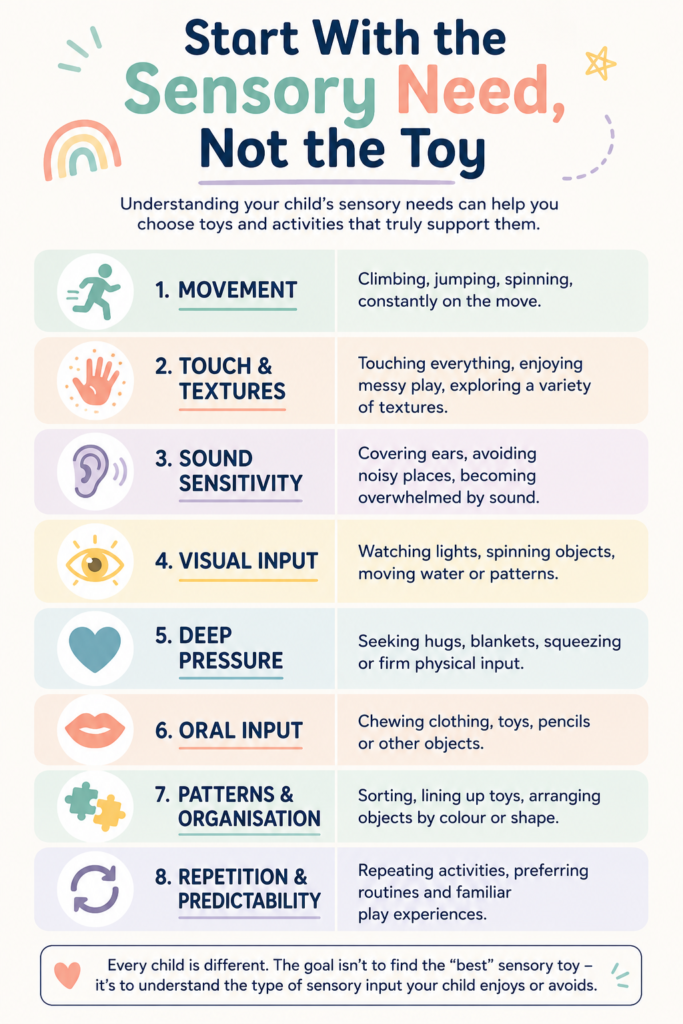
Start With the Sensory Need, Not the Toy
Sensory toys are often grouped together, but they provide very different types of sensory input.
Before choosing any sensory tool, it helps to think about what your child may be communicating through their behaviour.
For example:
- Constant jumping, climbing or crashing into furniture may suggest a need for movement and body-awareness input.
- Chewing sleeves, pencils or toys may indicate a need for oral sensory input.
- Distress in busy or noisy environments may suggest a need to reduce sensory input rather than add more.
- A fascination with lights, spinning objects or moving water may point towards visual sensory interests.
These observations won’t explain every behaviour, but they can provide useful clues about which sensory tools may be worth exploring.
This is often why observation and experimentation matter more than finding the “perfect” product.
What Research Can Tell Us
One of the biggest misconceptions about sensory toys is that certain products are universally calming or helpful for neurodivergent children.
Research¹ suggests something more nuanced. In a study examining how neurodivergent children interacted with equipment in a multi-sensory environment, researchers found that preferences varied considerably between children. The equipment children chose to spend time with was linked to their individual sensory characteristics rather than autism itself.
In other words, children were not drawn to the same sensory experiences simply because they were neurodivergent. Their preferences reflected their own unique sensory profiles, interests and patterns of sensory seeking.
For that reason, sensory toys are best viewed as tools rather than solutions.
The goal isn’t to build a large collection of sensory products. It’s to identify a small number of tools that genuinely support your child’s comfort, regulation and participation in daily life.
If you want to better understand what sensory overwhelm actually feels like for your child — and how to respond in the moment — this guide explains it in a simple, practical way:
→ What it Feels Like When Your Autistic Toddler is Overwhelmed and How to Help
Disclaimer: This post contains affiliate links. As an Amazon Associate I may earn from qualifying purchases at no extra cost to you.
Sensory Toys for Children Who Seek Tactile Input
Some children are naturally drawn to sensory experiences that involve touch, texture and hands-on exploration.
You might notice them squeezing, stretching, rubbing, pouring, mixing or repeatedly handling different materials. For many children, tactile activities provide opportunities to explore sensory input in a way that feels engaging, predictable and self-directed.
Examples might include:
- therapy putty
- play dough
- kinetic sand
- sensory sand box
- sensory bins
- water play
- textured sensory toys
Open-ended tactile activities are often particularly appealing because there is no single correct way to engage with them. Children are free to squeeze, pour, sort, build and explore at their own pace while discovering which textures and sensations they enjoy most.
Because tactile preferences vary considerably between children, these types of activities can also be a useful starting point for families who are still learning which sensory experiences their child finds comfortable and engaging.
Sensory Toys for Children Who Need Movement
Some children seem happiest when they are moving.
They may constantly climb, jump, spin, balance, crash into cushions or seek opportunities to move their bodies throughout the day. For these children, movement is often more than just play — it can be an important way of exploring the world and interacting with their environment.
Activities that involve climbing, balancing, carrying, pushing and pulling can provide opportunities for movement while also supporting body awareness and coordination. Many children naturally return to these types of activities because they combine physical challenge with predictable sensory feedback.
Examples might include:
- climbing triangles
- balance boards
- stepping stones
- push and pull toys
- obstacle courses
- movement-based play equipment
Many families find that movement-based activities are particularly helpful before quieter tasks, as some children naturally find it easier to focus once they have had an opportunity to move their bodies.
Sensory Toys for Children Who Need to Keep Their Hands Busy
Some children seem most comfortable when their hands are occupied.
They may tap, fiddle, spin objects, twist clothing, repeatedly manipulate toys or seek something to hold while listening, learning or waiting.
For these children, sensory tools that provide tactile feedback and opportunities for repetitive hand movements can offer a simple outlet for that need.
Activities involving pressing, twisting, stretching, linking, squeezing or manipulating objects are often particularly appealing because they allow children to keep their hands active while focusing on something else.
Examples might include:
- push-and-pop style fidget toys
- flexible sensory tubes
- pop tubes
- therapy putty
- silicone pull-string toys
- simple fidget toys designed for repetitive hand movements
As with most sensory tools, the goal is not to stop a behaviour but to provide an appropriate outlet for it. Some children enjoy toys that offer resistance and tactile feedback, while others prefer quieter, repetitive movements that can be used during travel, waiting periods or calmer activities.
Sensory Toys for Children Sensitive to Noise
For some autistic children, the challenge is not seeking more sensory input—it’s managing too much of it.
Busy classrooms, supermarkets, family gatherings and public spaces can sometimes feel overwhelming because of the number of sounds happening at once.
Tools that reduce or manage background noise can sometimes help make these environments feel more manageable and predictable.
Examples:
- noise-reducing headphones
- earmuffs
- quiet spaces
- calm corners
Some children only use these tools occasionally, while others prefer having them available whenever environments become busy or unpredictable.
Many families also find it helpful to create a dedicated calm corner where sensory tools, comfort items and quiet activities are always available. If you’re interested in setting one up, this guide walks through simple calm corner ideas that can grow with your child over time.
→ How to Create a Calm Corner for Toddlers
As with all sensory supports, the goal is not to avoid everyday experiences entirely, but to help children participate in a way that feels comfortable and manageable for them.
Sensory Toys for Children Who Benefit From Deep Pressure
Some children appear to find firm, consistent pressure calming and reassuring.
You may notice them wrapping themselves in blankets, burrowing into cushions, seeking close physical contact or gravitating towards activities that provide a sense of comfort and security.
Deep-pressure sensory tools are designed to provide gentle, consistent sensory feedback that some children find grounding and predictable. These tools are often used during quieter activities, calm-down routines or moments when a child may benefit from additional sensory support.
Examples might include:
- weighted lap pads
- weighted blankets
- sensory play tunnels
- body socks
- compression-style sensory tools
As with all sensory tools, preferences vary considerably between children. Some actively seek deep-pressure input, while others show little interest. The goal is not to use every type of sensory tool available, but to identify the experiences that genuinely help your child feel comfortable and supported.
Sensory Toys for Children Who Seek Oral Input
If you notice your child frequently chewing sleeves, pencils, toys or other everyday objects, they may be seeking oral sensory input.
While the behaviour can sometimes be frustrating, it is often more helpful to think about the sensory need behind it before trying to stop it.
Oral sensory tools provide a dedicated outlet for chewing and are designed to be safer and more durable than everyday items. They are available in a variety of shapes, textures and levels of resistance, allowing families to explore what feels most comfortable for their child.
Examples might include:
- chew necklaces
- chewable pencil toppers
- handheld chewable sensory tools
- textured oral sensory aids
Some children prefer softer textures, while others seek firmer resistance when chewing. As with all sensory tools, a little experimentation is often needed to find a good match for a child’s individual preferences.
Sensory Toys for Children Drawn to Visual Input
Some children are naturally drawn to visual sensory experiences such as moving lights, colour changes or slow, repetitive motion.
Visual sensory tools provide predictable movement and visual feedback that many children find engaging. Research¹ exploring how autistic children use multi-sensory environments found that visual equipment was often popular, although preferences still varied considerably from one child to another.
Examples include:
- lava lamps
- light projectors
- bubble tubes
These types of sensory tools are often used to create a calmer environment or provide a focused visual activity during quiet time.
Visual sensory tools are often most effective when used in moderation. For some children they are calming; for others they can become distracting.
When well matched to a child’s sensory preferences, they can encourage focused observation and provide predictable visual input through slow, repetitive movement.
Sensory Toys for Children Who Love Sorting, Patterns and Organisation
Some children are naturally drawn to order, patterns and categorising objects.
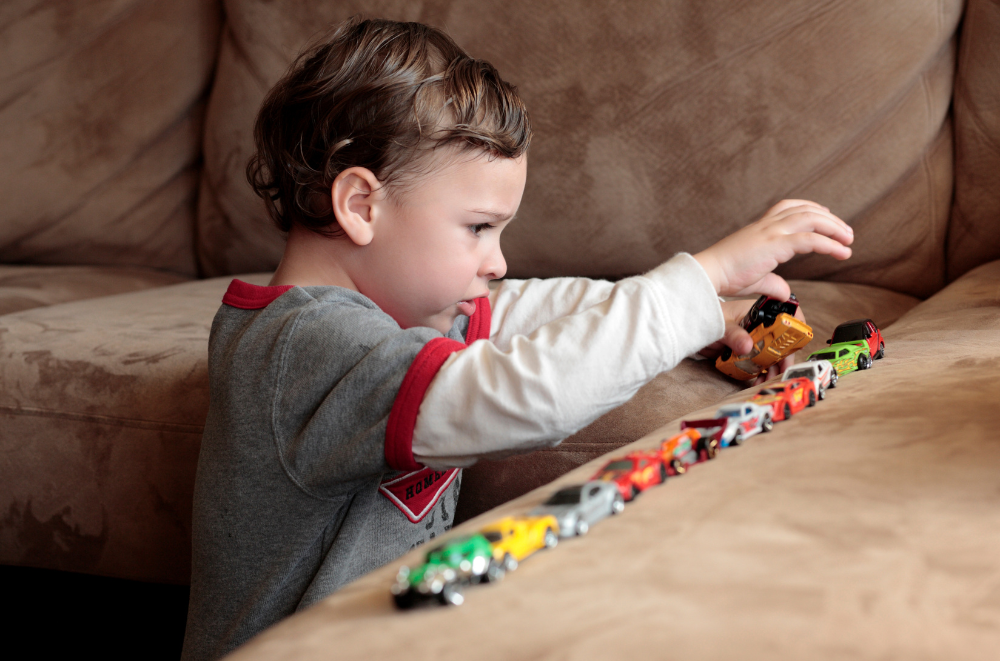
You might notice them sorting toys by colour, arranging items into groups, lining objects up or becoming deeply focused on matching activities.
While this isn’t always thought of as a sensory need in the traditional sense, these activities often provide the predictability and structure that many children find enjoyable. For some, the appeal comes from creating order; for others, it is the opportunity to repeat the same action in a familiar and consistent way.
Children who enjoy sorting and organising are often drawn to activities involving matching, categorising, colour sorting and simple patterns. Activities such as colour sorting beads, rainbow counting cups, magnetic colour maze, wooden sorting trays and object matching sets can provide opportunities to explore these interests while supporting concentration and independent play.
If this sounds familiar, you may also find our guide to sensory toys for autistic toddlers helpful, where we share some of the specific activities and materials that worked well for us.
Building a Simple Sensory Toolbox
As you learn more about your child’s sensory preferences, it can be helpful to keep a small collection of familiar sensory tools available at home.
This doesn’t need to be complicated.
For one child, that might mean a favourite fidget toy and a pair of headphones. For another, it could be therapy putty, a chewable sensory tool or a familiar comfort object.
Some families keep these items in a quiet corner or calming space so they are easy to access when needed.
The goal is not to create the perfect sensory setup.
It’s simply to have a few trusted tools that your child can return to when they need support, comfort or sensory input.
If you’re creating a dedicated calm space at home, you may also find our guide to creating a Montessori calm corner for toddlers helpful.
Final Thoughts
There is no single sensory toy that works for every neurodivergent child.
The most helpful tools are the ones that match your child’s individual sensory needs.
Start with one or two options, observe how your child responds and adjust from there.
What works for one child may not work for another—and that’s completely normal.
Over time, you’ll build a small sensory toolbox that genuinely supports your child—not because it is popular, but because it works for them.
Research Behind This Article
This article was informed in part by the following research:
1- Unwin KL, Powell G, Price A, Jones CRG. Patterns of equipment use for autistic children in multi-sensory environments: Time spent with sensory equipment varies by sensory profile and intellectual ability.
The study found that autistic children showed different preferences for sensory equipment depending on their individual sensory characteristics, reinforcing the importance of matching sensory tools to the child rather than looking for a single “best” sensory toy.
Frequently Asked Questions About Sensory Toys for Autistic Children
How do I know which sensory toy is right for my autistic child?
The best sensory toy depends on your child’s individual sensory needs.
For example, a child who seeks tactile input may enjoy therapy putty or sensory play, while a child who is sensitive to noise may benefit more from noise-reducing headphones.
Rather than looking for a single “best” sensory toy, it is usually more helpful to start with one or two options and observe how your child responds.
What sensory toys help autistic children stay calm?
Some children find sensory tools calming because they provide predictable sensory input.
Common examples include weighted lap pads, sensory lighting, therapy putty and simple fidget toys.
However, what feels calming varies between children, which is why sensory tools should be matched to individual preferences rather than chosen based on popularity alone.
What sensory toys help with focus and attention?
Many children concentrate better when they have access to appropriate sensory input.
Tools such as fidget toys, therapy putty and chewable sensory tools may help some children stay engaged during quieter activities by providing movement or tactile feedback.
Are sensory toys recommended by occupational therapists?
Occupational therapists often use sensory tools as part of a wider approach to supporting sensory regulation and participation in daily activities.
The specific tools recommended will depend on the child’s sensory profile, strengths and challenges.
What sensory toys can I use at home?
Sensory toys for home use do not need to be expensive or complicated.
Many families start with a small collection of items such as a fidget toy, therapy putty, noise-reducing headphones or sensory play materials like kinetic sand and play dough.
What are the best sensory toys for autistic children?
There is no single sensory toy that works for every autistic child.
Research suggests that autistic children have different sensory preferences, which is why the most effective sensory tools are those that match the child’s individual needs and interests.
Can sensory toys help with sensory overload?
Sensory toys cannot remove sensory overload, but they may help some children manage sensory input more comfortably.
For example, noise-reducing headphones can lower background noise, while tactile or movement-based sensory tools can provide predictable sensory input during stressful situations.