
Why Is 18 Months Is So Hard and What Actually Helps
If your child is around 18 months, you may have noticed a shift.
Things that once felt manageable suddenly feel harder.
More resistance.
More frustration.
More intensity.
You might find yourself wondering:
“Why is this suddenly so difficult?”
Your child has only been in the world for around 500 days.
Not long ago, everything around them was completely new.
In many ways, it still is.
The truth is:
18 months is a major developmental turning point.
And what you’re seeing is usually not bad behaviour.
It’s change.
Your toddler is becoming more aware, more independent, and more emotionally expressive — all before they fully have the skills to manage it.
That gap is what makes this stage feel so intense.

Why 18 Months Feels So Hard
At this age, toddlers want far more independence.
They want to choose, explore, climb, communicate, and do things themselves.
But emotionally and physically, they still need a lot of support.
So you end up with a constant push-pull:
“I want to do it myself.”
“I can’t do it myself.”
“Help me.”
“No, not like that.”
This often shows up as frustration, clinginess, throwing, resistance, or sudden emotional reactions.
Not because your toddler is trying to be difficult.
But because awareness is growing faster than regulation.
Communication Frustration Is a Big Part of It
At 18 months, toddlers often understand far more than they can actually say.
They may know they want the blue cup, a particular snack, or a specific toy — but not yet have the words to explain it clearly.
And frustration builds quickly when they feel misunderstood.
That’s why behaviour at this age is so often communication first — not manipulation.
Why 18 Months Often Feels Like a Sudden Change
One reason parents often find 18 months surprising is that development doesn’t happen gradually. Children frequently appear to change overnight.
Around this age, many toddlers experience rapid growth in mobility, understanding, communication and self-awareness at roughly the same time.
Suddenly they realise they can influence the world around them.
They can choose.
Refuse.
Point.
Request.
Protest.
Explore.
The problem is that emotional regulation develops much more slowly.
So while the desire for independence grows rapidly, the ability to cope with frustration often doesn’t keep pace.
That mismatch is one of the reasons 18 months can feel so intense.
Common Behaviours at 18 Months
Around this age, many toddlers begin:
- saying “no” constantly
- resisting transitions
- throwing objects
- becoming more clingy
- reacting strongly to small frustrations
These behaviours are often connected.
They tend to appear during periods of rapid development, especially when communication, independence, and emotional awareness are all expanding at once.
If your toddler is also throwing things during this stage, it often comes from the same place → Why Toddlers Throw Things (And What They’re Learning)
They Are Moving More Than Ever
Around 18 months, many toddlers seem to be developing new physical skills almost daily. Climbing, running, carrying, pushing and exploring become powerful drives at this age. What can sometimes look like defiance is often a toddler trying to practise a skill their body is suddenly capable of.
Why It Feels Hard for Parents
This stage can feel exhausting because behaviour becomes far less predictable.
Some days feel calm.
Other days feel impossible.
And it can suddenly feel like nothing works consistently anymore.
That doesn’t mean you’re doing something wrong.
It means your child is moving through a stage where development feels messy, emotional, and uneven.
What Actually Helps
At this age, the goal is not perfect behaviour.
It’s support.
1. Lower Your Expectations Temporarily
One of the hardest parts of the 18-month stage is that parents often expect behaviour that matches their toddler’s growing intelligence.
But understanding and self-control are not the same thing.
Your toddler may understand what you’re saying while still being completely unable to manage their feelings in that moment.
Sometimes progress looks less like teaching new skills and more like supporting development while those skills catch up.
2. Keep things simple
Too many toys, choices, or transitions can increase overwhelm.
Calmer spaces and simpler routines often help more than adding extra stimulation.
If your toddler struggles to stay engaged, simplifying play can help → Montessori Toy Rotation: The Simple System That Keeps Toddlers Engaged
If you’re also rethinking your toddler’s environment, this may help: → How to Design a Montessori Bedroom for 12–18 Month Olds
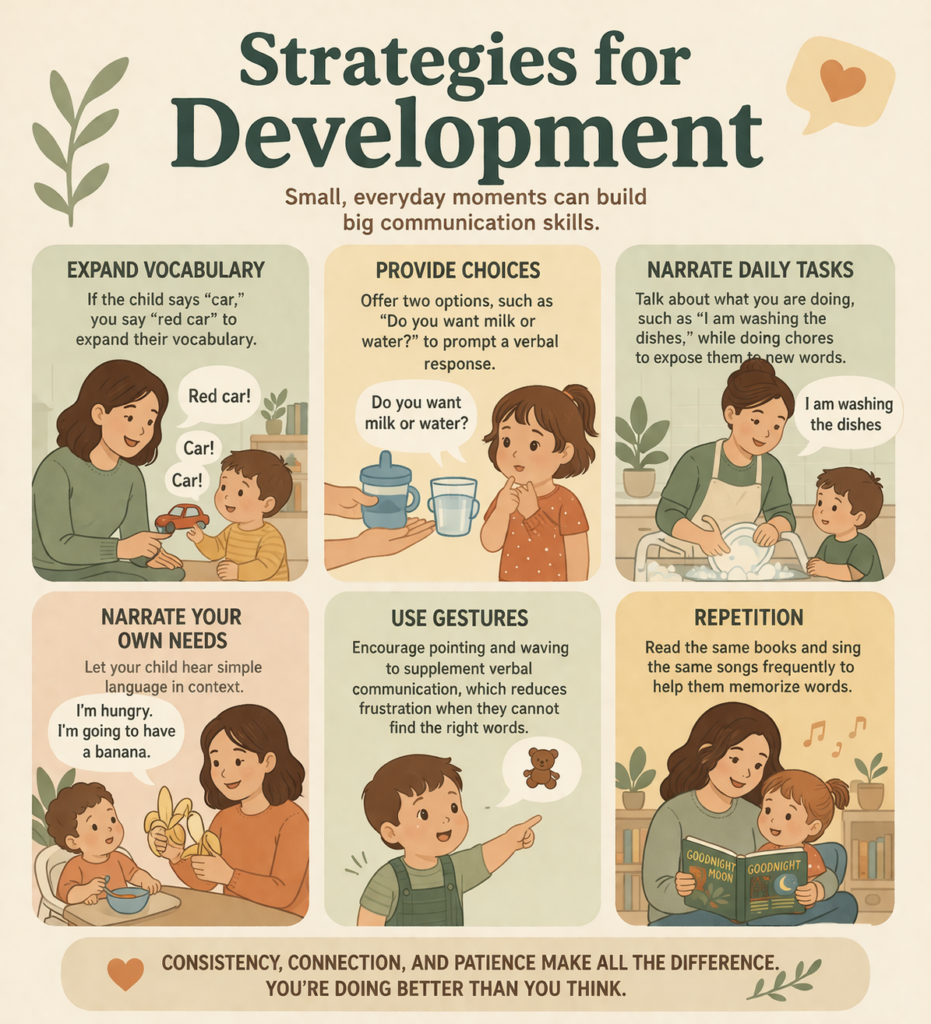
3. Offer Limited Choices
Instead of open-ended questions, offer two simple choices:
“This one or this one?”
This supports independence without creating overwhelm.
4. Stay predictable
Simple daily rhythms help toddlers feel safe.
Meals, naps, bedtime, and repeated routines reduce uncertainty — especially during emotionally intense stages.
If you want a simple structure, this can help → A Simple Montessori Toddler Daily Routine for Calm Days
5. Use simple language throughout the day
At 18 months, small everyday moments often support communication more than formal “teaching.”
Talking through what you’re doing helps build understanding naturally over time.
“We’re putting your shoes on.”
“I’m washing the dishes.”
“I’m hungry. I’m going to have a banana.”
And when your child says a single word, you can gently expand it without pressure.
If they say:
“Car.”
You might respond with:
“Yes, a red car.”
These small, repeated interactions help toddlers gradually connect words, actions, and needs in a way that feels calm and natural.
If you’re looking for more low-pressure ways to support communication, this may also help → Simple Montessori Activities for Speech Delay and Late Talkers
6. Repeat what feels familiar
Reading the same books and singing the same songs might feel repetitive — but this is how children learn.
Repetition builds confidence and recognition.
7. Focus on connection first
At this age, regulation comes before cooperation.
Getting down to your toddler’s level, staying calm, and acknowledging feelings often helps more than immediately correcting behaviour.
The Bigger Picture
What feels difficult now is part of something important.
Your toddler is building:
- independence
- emotional awareness
- communication
- confidence
And those skills rarely develop neatly.
They grow through repetition, frustration, experimentation, and connection.
Sometimes that process looks messy.
Final Thoughts
18 months can feel intense.
But it’s not a sign that something is wrong.
It’s a sign that your child is changing.
They’re becoming more aware of the world, more aware of themselves, and more determined to participate in both.
Even when it doesn’t always look like progress yet.
Sometimes the hardest stages are the ones where the biggest changes are happening underneath.
Frequently Asked Questions About the 18 Month Stage
Is it normal for an 18 month old to be difficult?
Yes — this stage often feels harder because your toddler is developing independence, emotions, and awareness all at once.
They want more control, but don’t yet have the skills to manage it.
What looks like “difficult behaviour” is often a combination of frustration and rapid development happening at the same time.
Why does my 18 month old have so many tantrums?
Tantrums increase around this age because toddlers feel more than they can express.
They understand more, want more independence, and become frustrated when things don’t go as expected.
This is a normal part of emotional development — not something you’ve caused.
Why is my 18 month old suddenly so moody?
Mood changes are common at 18 months.
Your toddler is processing new emotions, navigating independence, and dealing with rapid brain development.
Some days feel calm.
Others feel intense.
That variation is part of the phase.
Why does my 18 month old say “no” to everything?
Saying “no” is one of the first ways toddlers express independence.
It doesn’t mean they are being oppositional.
It means they are discovering they have control
Offering limited choices can help reduce frustration while still supporting autonomy.
Why is my 18 month old suddenly clingy again?
Clinginess can return during this stage because your child is more aware of separation.
Even as independence grows, the need for connection remains strong.
This push-pull between independence and closeness is completely normal.
How do I handle difficult behaviour at 18 months?
Focus on support rather than control.
What helps most:
- simple, predictable routines
- a calm, uncluttered environment
- staying emotionally steady during big reactions
- offering limited choices
Over time, these create a sense of safety — which reduces frustration.
When does the 18 month phase get easier?
This stage doesn’t end suddenly.
It gradually becomes easier as your child develops:
- better communication
- more emotional regulation
- increased confidence
You may notice small improvements before you see big changes.
Is 18 Months Harder Than Age 2?
Many parents are surprised to find 18 months more challenging than they expected.
At this age, toddlers are developing independence, communication, mobility and emotional awareness all at once, but they still have very limited self-regulation. This can create a lot of frustration for both children and parents.
Age two brings its own challenges, but many toddlers have developed more language and a better ability to communicate their needs by then, which can reduce some of the frustrations seen at 18 months.
Rather than one age being objectively harder than another, the challenges simply tend to change as children develop.
For many families, 18 months feels difficult because so much development is happening beneath the surface at the same time.
You Might Also Find Helpful