
When and How to Use Visual Timers for Toddlers
If you have a toddler, you’ve probably experienced this moment before:
You give a warning.
“5 more minutes.”
“We’re leaving soon.”
And somehow the transition still ends in frustration, resistance, or a sudden meltdown.
Even when the change seems small.
For many toddlers, the problem is not really the transition itself.
It’s time.
Young children do not fully understand time yet. Phrases like “later,” “soon,” or even “5 minutes” can still feel very abstract at this age, which is why stopping an enjoyable activity can sometimes feel abrupt, confusing, or emotionally overwhelming.
When daily routines constantly feel rushed or stressful, some children can begin to associate transitions with tension and pressure rather than predictability and safety.
Many toddlers rely heavily on what they can physically see and experience in the moment. Without something concrete to help them visualise what’s happening next, transitions can feel unpredictable rather than gradual.
That’s where visual timers can help.
What Is a Visual Timer?
A visual timer shows the passage of time in a way toddlers can actually see and understand.
Most use a simple coloured countdown that gradually disappears, helping children understand how much time is left without relying only on verbal reminders.
For many toddlers, this can make transitions feel clearer, calmer, and easier to prepare for.

Disclaimer: This post contains affiliate links. As an Amazon Associate I earn from qualifying purchases at no extra cost to you.
When Visual Timers Can Help Most
You don’t need to use them all day.
But they can be especially helpful during:
Leaving the house
Suddenly stopping play to put shoes on can feel abrupt and frustrating for many toddlers — especially when they were deeply focused on what they were doing.
A visual timer helps your toddler see when the transition is coming rather than feeling suddenly interrupted.
At the beginning, it often helps to use the timer very consistently and keep expectations simple.
For example:
- Set the timer together
- Give one calm reminder (“When the red is gone, it’s time for shoes”)
- Follow through consistently
- Praise cooperation immediately
Even something small like:
“High five — you did it!”
or
“You noticed the timer!”
can help toddlers connect the routine with something positive and predictable.
You’ll often notice similar improvements when daily routines feel more predictable overall.
Bedtime transitions
Moving from play to bath to sleep can feel smoother when each step has a clearer ending point. Visual timers can be especially helpful during bedtime routines that regularly feel rushed, emotional, or difficult to transition away from.
If bedtime struggles are ongoing more generally, gentle routine changes can often help support calmer evenings and easier transitions into sleep.
Independent play
Some toddlers constantly ask when an activity is ending or when a parent is coming back. A visual timer can sometimes make independent play feel less uncertain because the ending feels easier to predict.
For toddlers who struggle to stay engaged independently, simple Montessori-style play setups can often make independent play feel easier and more manageable over time.
Turn-taking
Waiting while another child uses a favourite toy can feel genuinely upsetting for toddlers who are still learning patience and turn-taking.
A timer helps make turns feel fair and predictable.
Do You Need a Visual Timer?
Not always. But some toddlers find transitions especially difficult — particularly when activities end suddenly, routines change, or they’re asked to stop something they’re enjoying.
In those situations, a simple visual timer can sometimes make everyday transitions feel clearer, calmer, and easier to prepare for.
What to Look For in a Visual Timer
Keep it simple.
The best options are:
- easy to understand (clear visual countdown)
- quiet (no loud alarms)
- durable and simple to use
A widely used option is:
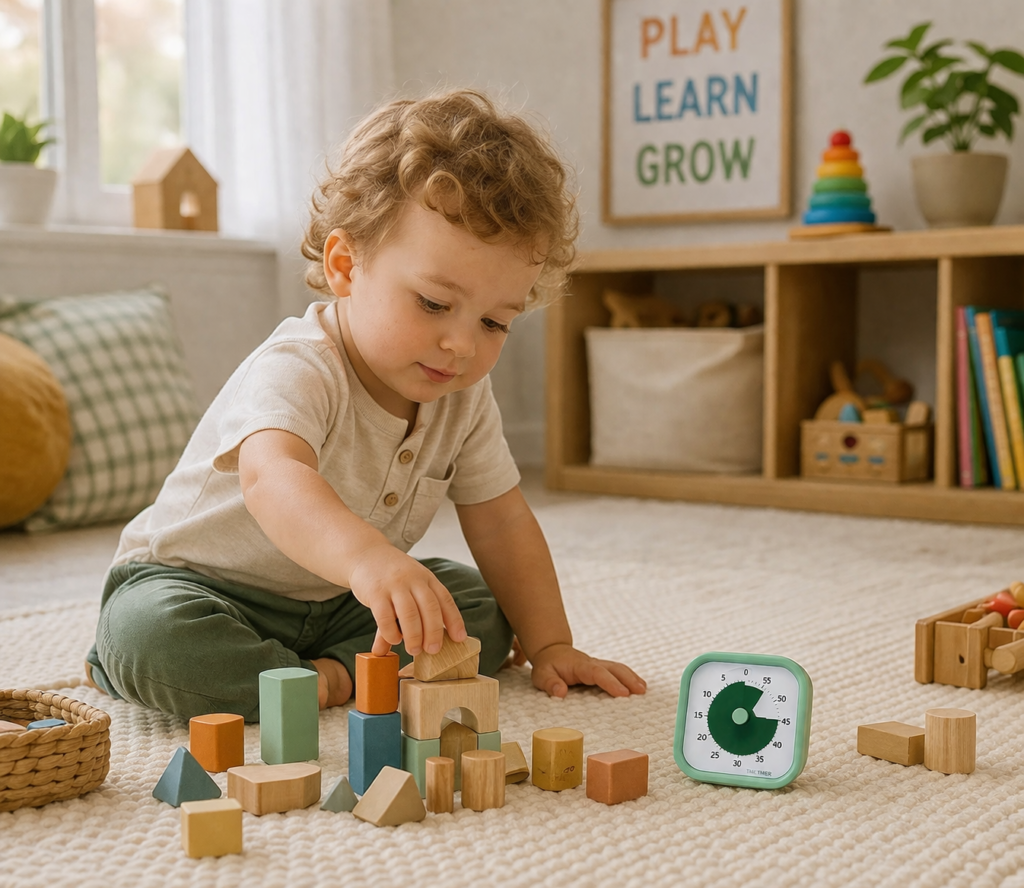
Time Timer MOD – Visual Countdown Timer (60 minutes)
The Time Timer MOD works especially well for toddlers because the disappearing coloured section makes transitions easier to understand visually without needing constant reminders. Many families use it for screen time, leaving the house, bedtime routines, or independent play because it feels simple, predictable, and easy to use consistently throughout the day.
A Simpler Alternative – Sand Timers
You don’t necessarily need a dedicated visual timer.
For some toddlers, simple tools like sand timers, drawn countdowns, or consistent verbal cues can work just as well — especially when used regularly as part of familiar routines.
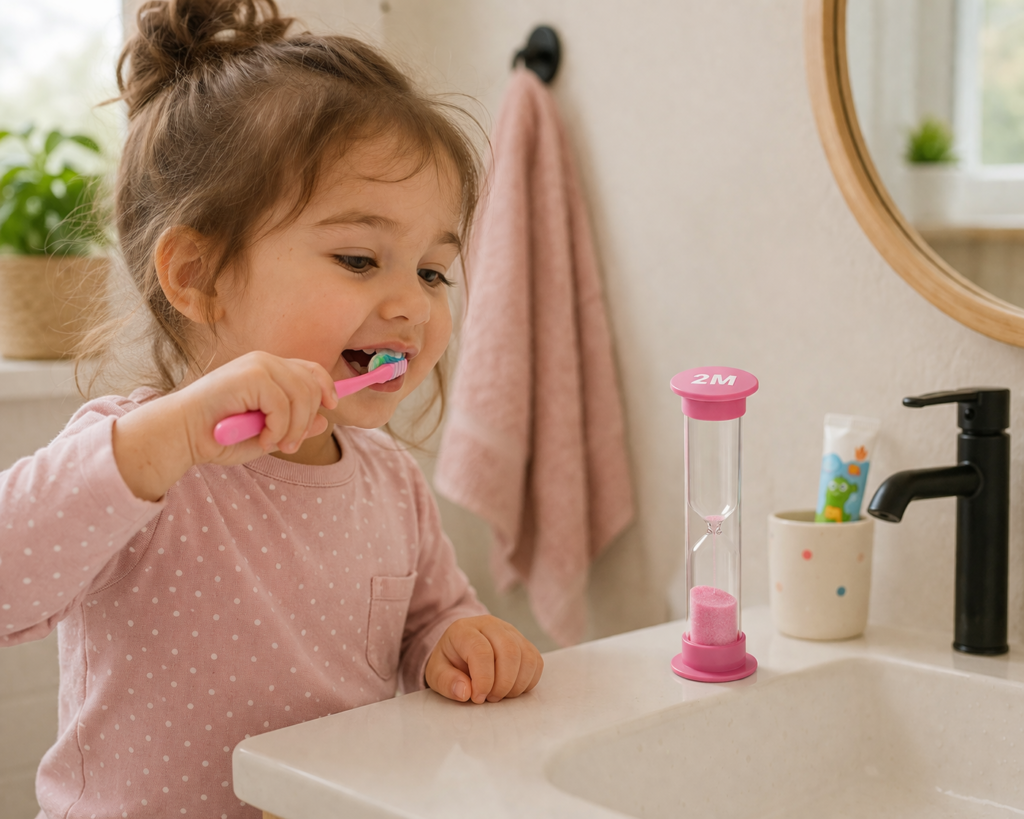
Colorful Hourglass Sand Timer Set of 6 – (30s/1/2/3/5/10 Min)
Simple sand timers like this colourful Set of 6 can be useful for short everyday activities such as brushing teeth, tidy-up time, getting dressed, or turn-taking. Because they’re silent and easy to understand visually, many children naturally begin following the routine without needing as many reminders.
How to Introduce a Visual Timer
Start with one consistent part of the day — like ending playtime, leaving the house, or moving into bedtime routines.
Show the timer clearly and keep the explanation simple:
“When the red is gone, we’re finished.”
Over time, many toddlers begin recognising the pattern themselves, which can make transitions feel less abrupt and easier to prepare for.
What to Expect
A visual timer won’t remove all frustration or resistance, especially during emotional or overtired moments.
But for many families, it helps reduce the intensity of transitions by making expectations feel clearer and more predictable.
For many families, simply making transitions feel clearer and more predictable can already make a noticeable difference.
Transitions can feel especially intense for toddlers because the parts of the brain responsible for emotional regulation and flexible shifting between activities are still developing rapidly during the early years.
When toddlers are deeply focused on play, suddenly stopping requires the brain to shift attention, process disappointment, regulate emotions, and adapt to something new — all at the same time.
That’s a lot of neurological work for a young child.
Visual timers can help reduce some of that stress by making transitions feel more predictable and easier for the brain to prepare for gradually rather than abruptly.
Final Thoughts
Visual timers are a simple tool, but for many families they can make everyday transitions feel calmer and easier to manage.
Sometimes small changes that make routines feel clearer can have a surprisingly big impact over time.
FAQs
Do visual timers really work for toddlers?
For many toddlers, yes. They don’t change behaviour instantly, but they can make transitions feel more predictable, which often reduces resistance and emotional overwhelm.
What age can you start using a visual timer?
You can introduce one around 18 months to 2 years, but it becomes especially helpful between ages 2–3, when toddlers are more aware of routines but still don’t understand time.
How long should I set the timer for?
Keep it short and realistic.
Start with 2–5 minutes for transitions, and adjust based on your child and the situation.
What if my toddler ignores the timer?
That’s normal at first.
Consistency matters more than immediate results. Over time, your toddler begins to connect the visual countdown with what happens next.
Should I still give verbal warnings?
Yes. Visual timers work best alongside simple, clear language like:
“When the red is gone, we’re finished.”
Can visual timers help with tantrums?
They can help reduce some triggers (like sudden transitions), but they won’t prevent all tantrums. Toddlers still need support through big emotions.
Are sand timers just as effective?
They can be.
For shorter activities (like brushing teeth or tidy-up time), sand timers are a simple, quiet alternative that still make time visible.
Do I need to use a timer for everything?
No.
Most parents find it helpful to use them for specific moments that are consistently difficult, rather than all day.
Will my toddler become dependent on it?
Not usually.
Over time, toddlers begin to internalise routines and expectations, and you may find you need it less.
What matters most when using a timer?
Consistency.
Using it in the same way, at the same moments, helps your toddler feel safe and understand what to expect.