Why Toddlers Throw Food (And What It Really Means)
Many parents experience the same frustrating moment during toddlerhood: a carefully prepared meal lands on the floor seconds after it reaches the table.
Food is dropped, thrown, squished, or swept off the tray with impressive determination. It can feel confusing and exhausting, especially when it seems to happen every day.
However, food throwing during toddlerhood is rarely deliberate misbehaviour. In most cases, it reflects a child’s natural curiosity, developmental stage, and limited communication skills.
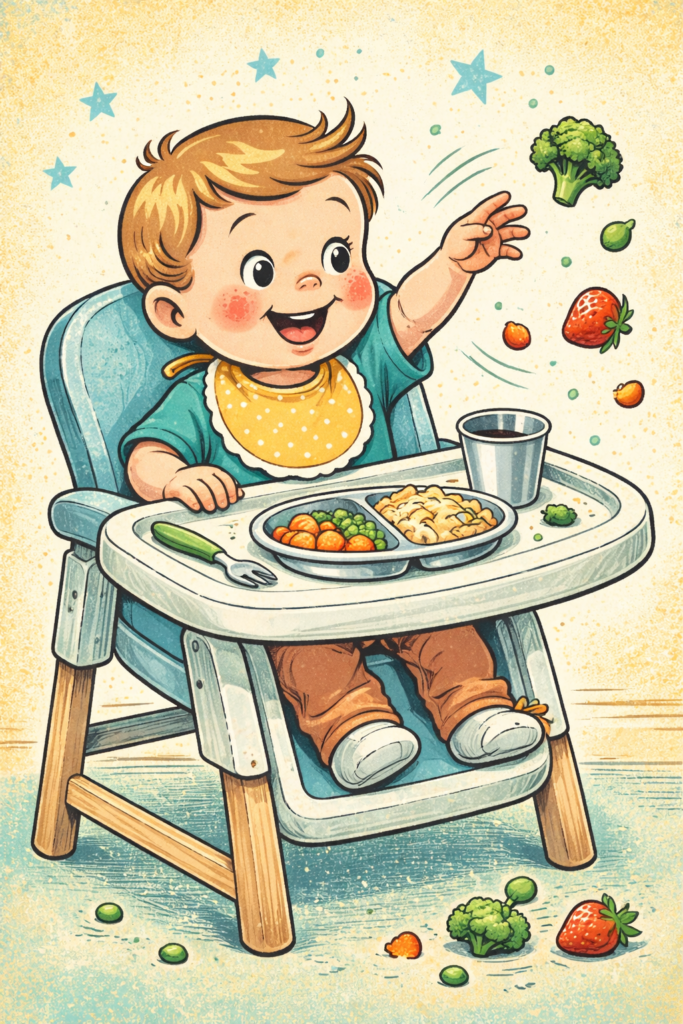
Understanding why toddlers throw food can help parents respond calmly and support healthy mealtime habits.
Many toddler behaviours that seem confusing to adults are actually related to normal developmental stages — similar to why some toddlers ignore instructions or appear not to listen.
Toddler Development Around Mealtimes
Between 12 and 24 months, toddlers experience rapid development in several important areas.
They are learning:
- how their bodies move
- how objects behave
- how to communicate their needs
- how to participate in everyday family routines
Mealtimes offer many opportunities for exploration. Food has interesting textures, colours, smells, and shapes. Plates, cups, and utensils also provide new sensory experiences.
For toddlers, dropping food is often simply another way of exploring their environment.
Cause and Effect Learning
One of the biggest reasons toddlers throw food is cause-and-effect learning.
Young children are fascinated by discovering what happens when they interact with objects.
When a toddler drops food, they observe:
- how it falls
- the sound it makes
- how adults react
- whether the object changes shape or texture
This experimentation is a natural part of cognitive development.
From a toddler’s perspective, dropping a piece of broccoli from the table is not very different from dropping a block or toy. It is simply an experiment.
This stage is closely connected to the development of early problem-solving skills and curiosity about the physical world.
Communication Without Words
Another common reason toddlers throw food is communication.
At this age, many toddlers have limited language skills. They may understand much more than they can express verbally.
Throwing food can sometimes mean:
- “I’m finished eating.”
- “I don’t want this food.”
- “I’m frustrated.”
- “I want your attention.”
When toddlers cannot easily express these messages, their behaviour often becomes their communication.
Recognising this can help parents interpret the behaviour more calmly rather than seeing it as intentional defiance.
Sensory Exploration
Toddlers also experience the world through their senses.
Food provides an incredibly rich sensory experience. It can be:
- soft
- sticky
- crunchy
- warm
- slippery
Some toddlers explore these textures by squeezing, smashing, or dropping food.
While this can be messy, it is part of how young children learn about different materials and sensations.
This sensory exploration is particularly common during the early stages of self-feeding.
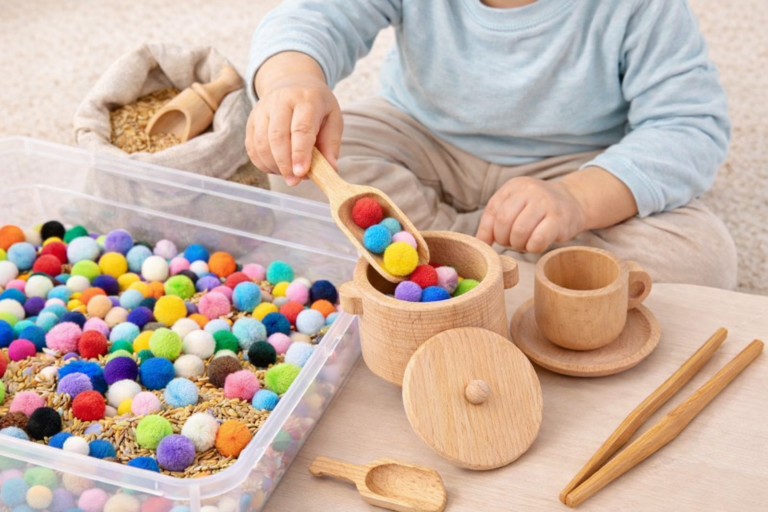
Toddlers often explore textures, colours, and objects through hands-on experiences in many areas of daily life, including play and simple activities.
Frustration During Mealtimes
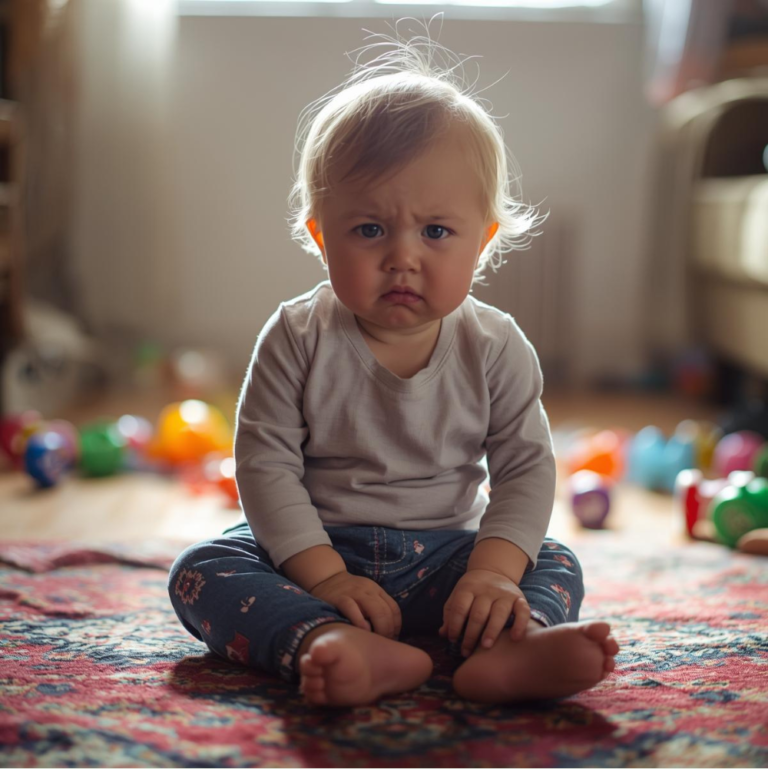
Sometimes food throwing happens when toddlers feel frustrated.
For example:
- the spoon is difficult to use
- the food is hard to pick up
- the portion is too large
- the toddler feels rushed
When toddlers struggle to control their tools or manipulate food successfully, frustration can quickly build.
In these situations, throwing food may be a way of releasing that frustration.
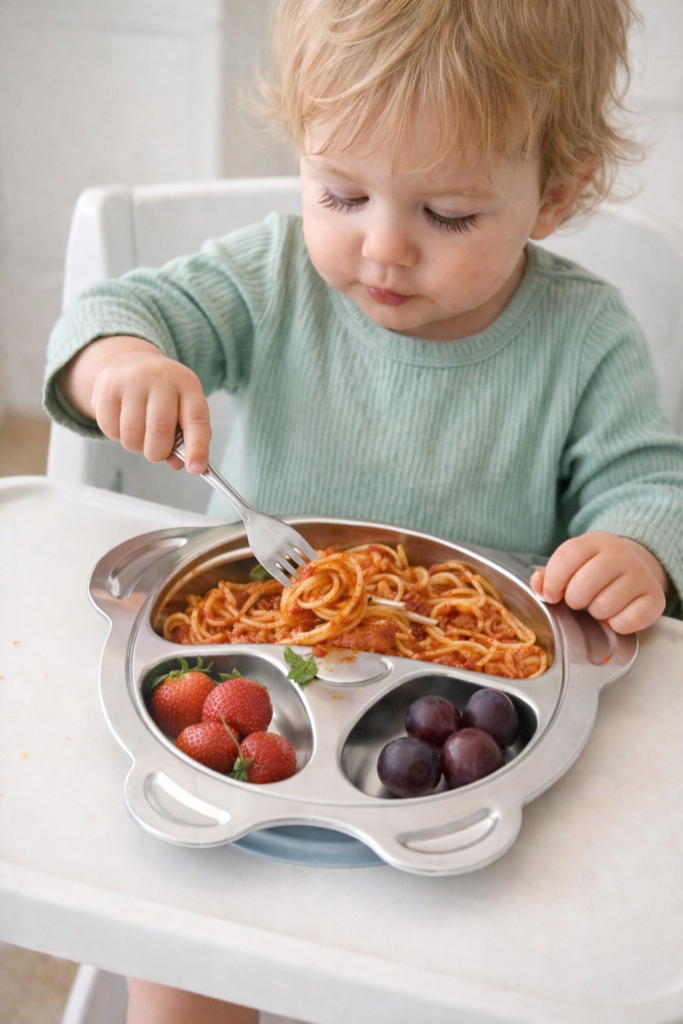
Supporting toddlers with child-sized utensils and manageable portions can sometimes reduce this type of behaviour.
Supporting toddlers with child-sized utensils and manageable portions can sometimes reduce this type of behaviour. Tools designed for small hands can make it easier for toddlers to practice independent eating during meals.
Overstimulation or Fatigue
Another factor that can influence food throwing is overstimulation or tiredness.
Toddlers often find it difficult to regulate their emotions when they are:
- overtired
- hungry
- overwhelmed
- distracted
If a toddler is already struggling to stay calm, mealtime behaviour may become more chaotic.
This is why many families find that consistent meal routines and calm eating environments can help toddlers focus more easily.
The Desire for Independence
Around 18–24 months, toddlers develop a strong desire for independence.
They often want to:
- hold their own spoon
- drink from their own cup
- decide what to eat first
- control the pace of the meal
If adults frequently intervene or take over feeding, toddlers may react by pushing food away or throwing it.
Encouraging toddlers to participate in feeding themselves can often reduce power struggles during meals.
This growing desire for independence also appears in other areas of toddler development, including independent play.
How Parents Can Respond Calmly
Although food throwing is common, there are ways parents can respond calmly while still setting clear boundaries.
Stay calm and neutral
Reacting strongly can sometimes make the behaviour more interesting for toddlers. A calm response helps avoid turning it into a game.
Offer smaller portions
Smaller portions can make food easier for toddlers to manage and reduce frustration.
Give simple explanations
Short, consistent phrases such as:
“Food stays on the table.”
help toddlers gradually understand expectations.
Remove food when the meal is finished
If food throwing clearly signals that the child is done eating, calmly ending the meal can prevent the behaviour from continuing.
Creating a Supportive Mealtime Environment
Montessori approaches to mealtimes often focus on helping toddlers participate actively in eating.
This might include:
- child-sized utensils
- stable plates or bowls
- manageable portions
- opportunities for self-feeding
When toddlers feel capable of participating in meals, they often become more engaged and less frustrated.
Messiness will still happen — but it becomes part of the learning process rather than a daily battle.
A Gentle Reminder for Parents
Food throwing can be one of the most frustrating parts of toddlerhood.
It is easy to feel discouraged when meals repeatedly end with food on the floor. However, these behaviours often reflect a toddler’s natural curiosity, developing independence, and limited communication skills.
With patience, clear routines, and opportunities for participation, most toddlers gradually move through this stage.
Over time, mealtimes tend to become calmer as toddlers develop the coordination and communication skills needed to fully participate in family meals.