
Montessori Toy Rotation: The Simple System That Keeps Toddlers Engaged
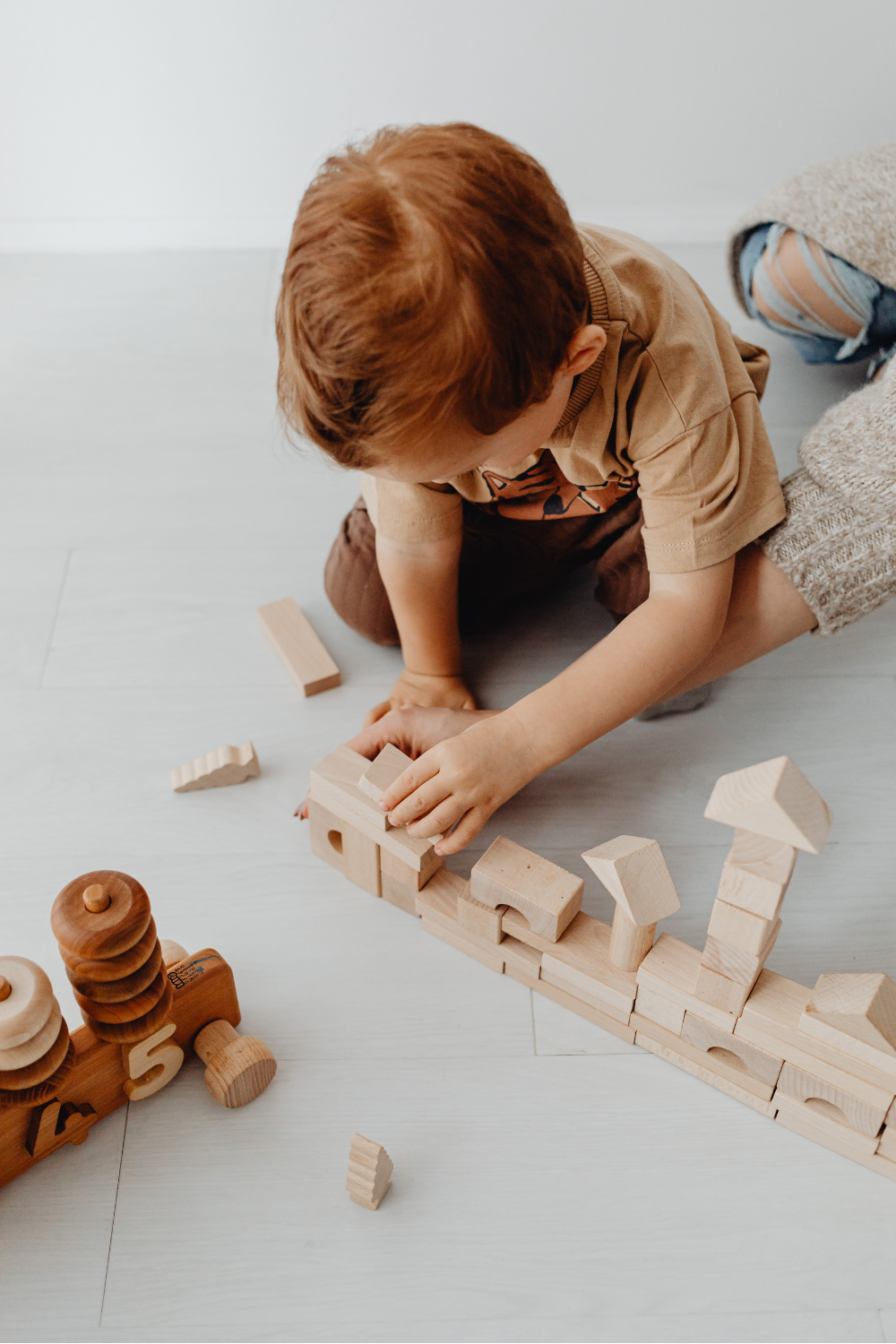
If your toddler constantly dumps toys on the floor, gets bored quickly, or jumps from one activity to another, the problem may not be the toys themselves — it may simply be too many choices at once.
Montessori toy rotation is a simple way to reduce overwhelm, help toddlers focus, and encourage longer, more meaningful play.
Instead of filling the room with dozens of toys, the Montessori approach focuses on fewer, more meaningful activities that support learning and independence.
Here’s how Montessori toy rotation works and how you can easily start using it at home.
Disclaimer: This post contains affiliate links. As an Amazon Associate I earn from qualifying purchases at no extra cost to you.
What Is Montessori Toy Rotation?
Montessori toy rotation means keeping only a small number of toys available at a time, while the rest are stored away and swapped in periodically.
This keeps the play environment simple, calm, and easy for toddlers to navigate.
When toys are rotated every week or two, they often feel new and exciting again, even though they’re toys your child already owns.
Toy rotation also helps children develop important skills like:
• concentration
• independence
• decision making
• responsibility for their environment
This approach is commonly used in Montessori homes because it supports focused, independent play.
If you’re interested in encouraging longer independent play sessions, you may also enjoy our guide on independent play for toddlers.
→ Best Montessori Tools for Independent Play — Full Guide
Why Toy Rotation Works for Toddlers
Toddlers learn best when they can focus deeply on a small number of activities.
When too many toys are available, children may feel overwhelmed and jump quickly from one activity to another.
This can lead to:
• short attention spans
• toys being dumped out quickly
• constant mess and clutter
• less meaningful play
Montessori toy rotation helps create an environment that encourages:
✔ longer concentration
✔ deeper learning through play
✔ more independent play
✔ a calmer, more organized play space
Many parents notice that once they simplify the play area, their toddler plays longer and with more focus.
If your toddler struggles to stay engaged with toys, you may also find this helpful:
→ Why Your 18–24 Month Old Toddler Won’t Play Alone
How Many Toys Should Be Out?
In Montessori environments, less is usually better.
For toddlers, a good starting point is 6–10 activities on the shelf.
These activities might include:
• stacking toys
• shape sorters
• simple puzzles
• sensory activities
• pretend play items
• books
Each activity should have its own space on the shelf, ideally in a small tray or basket.
This helps toddlers learn order, independence, and how to return toys after using them.
If you’re setting up a toddler play area, you might also find our guide to Montessori toys for toddlers helpful.
How Often Should You Rotate Toys?
Most Montessori families rotate toys every 1–2 weeks.
You can also rotate toys when you notice:
• your toddler seems bored with certain toys
• toys are rarely chosen anymore
• the shelf feels cluttered
There is no strict rule — the goal is simply to refresh the environment occasionally so toys feel interesting again.
How to Start Toy Rotation at Home
Starting toy rotation is easier than most parents expect.
Here’s a simple step-by-step approach.
1. Gather All Toys
Begin by collecting all of your child’s toys in one place.
Many parents are surprised by how many toys have accumulated over time.
2. Choose 6–10 Activities
Select a small group of toys that support different areas of development, such as:
• fine motor skills
• problem solving
• sensory exploration
• imaginative play
A balanced selection helps keep play interesting and engaging.
3. Store the Remaining Toys
Place the remaining toys in a storage box, closet, or bin.
Your toddler does not need to see these toys until they are rotated back in.
4. Arrange Toys on a Low Shelf
If your toddler constantly dumps toys on the floor, seems bored quickly, or jumps from one activity to another, the issue may not be the toys themselves — it may simply be too many choices at once.
Montessori toy rotation is a simple way to reduce overwhelm, help toddlers focus, and encourage longer, more meaningful play.
A big part of making this work is the environment. A low, child-accessible shelf with clearly defined spaces—like one with a few open compartments for toys, books, and small baskets—helps keep everything visible, organised, and within reach. This not only makes the room feel calmer, but also supports your child in learning how to choose activities and put them away independently.
With a simple, well-structured setup, even a small number of toys can feel engaging again.
→ Check the current price for this Montessori-style toy shelf
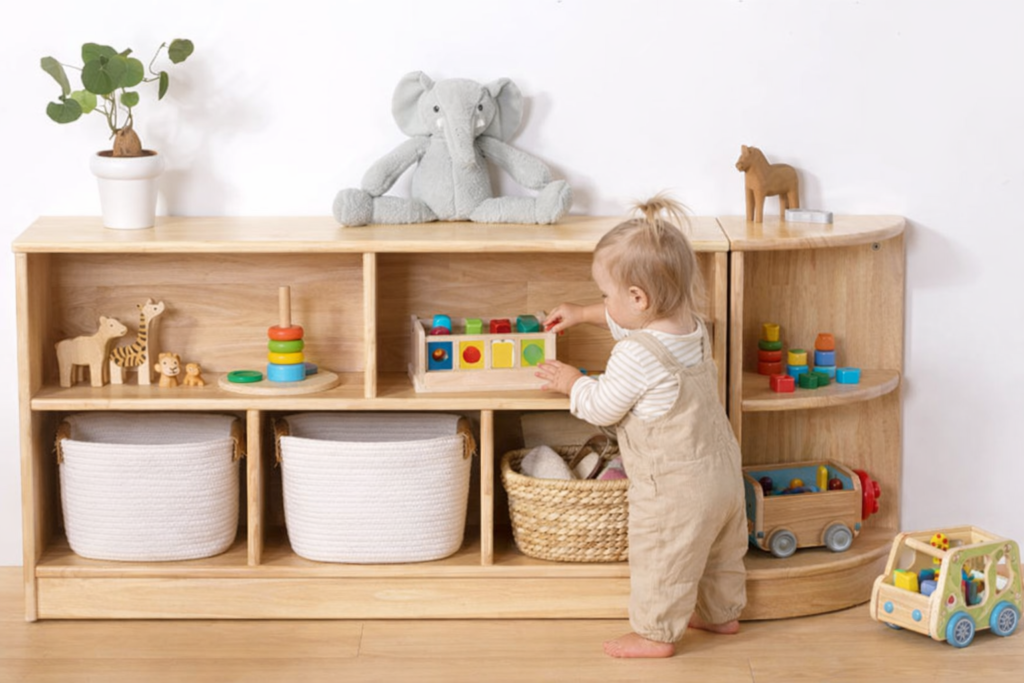
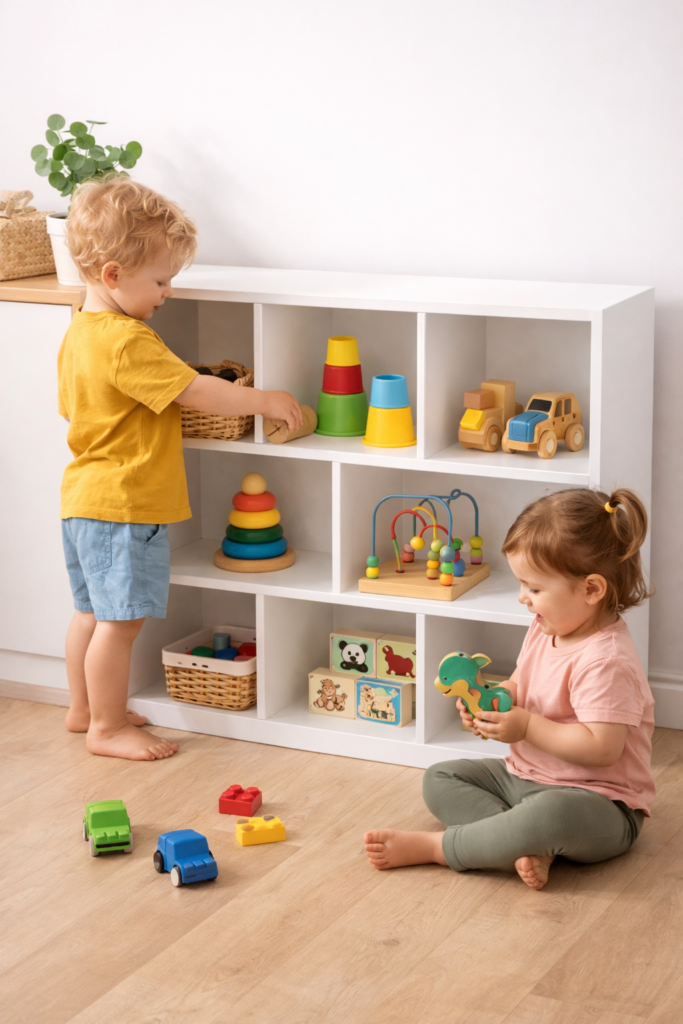
If you’re trying to keep things more budget-friendly, you don’t need a perfect Montessori shelf to start.
What matters most is:
- low height (within your child’s reach)
- open visibility (not closed boxes)
- a small number of items displayed clearly
Even a simple storage unit or repurposed shelf can work well if it allows your child to see and access their toys independently.
→ Check the current price for this budget-friendly Montessori-style shelf
5. Rotate Toys Periodically
Every week or two, replace two or three toys with different ones from storage.
You don’t need to change everything at once — small changes keep the environment familiar while still refreshing the play space.
Toy Rotation Ideas for Toddlers
Here are a few types of toys many parents include in a Montessori toy rotation.
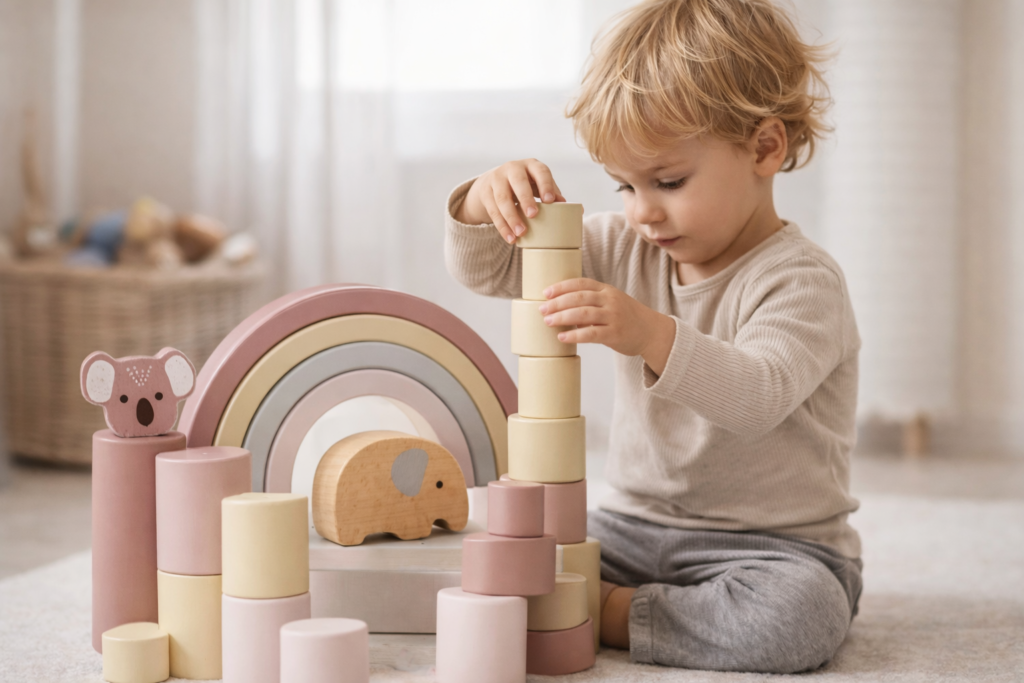
Fine Motor Activities
• stacking rings
• peg boards
• shape sorters
Problem Solving Toys
• simple wooden puzzles
• nesting cups
• matching games
Sensory Play
• sensory bins
• play dough
• textured balls
Practical Life Activities
• pouring activities
• stacking containers
• child-sized cleaning tools
Language Development
• board books
• animal figurines
• picture cards
These simple activities encourage toddlers to explore, repeat, and master new skills through play.
Signs Your Toy Rotation Is Working
Once toy rotation becomes part of your routine, you may notice several positive changes.
Your toddler may:
• play longer with each activity
• return toys to the shelf after using them
• focus more deeply during play
• become more independent
A calm, organized play space often leads to more peaceful playtime and fewer toy-related battles.
You can support this further with simple activity ideas:
→ Independent Play Ideas for Toddlers
Common Toy Rotation Mistakes
Rotating Too Many Toys
Changing every toy at once can feel overwhelming for toddlers.
Small changes work best.
Leaving Too Many Toys Out
If the shelf feels crowded, toddlers may struggle to choose activities or stay focused.
Simplifying the environment often improves concentration.
Rotating Too Frequently
Children sometimes need time to fully explore an activity.
Allow your toddler to revisit toys several times before rotating them out.
A Simple Rule to Remember
A helpful Montessori principle is:
Fewer toys often lead to deeper play.
Toy rotation isn’t about buying more toys.
It’s about creating a thoughtful environment where children can focus, explore, and develop independence.
Many parents find that once they reduce the number of toys, they also reduce stress — for both themselves and their child.
Final Thoughts
Montessori toy rotation is one of the easiest ways to create a calmer and more engaging play space for toddlers.
By offering a small selection of meaningful toys, you give your child the opportunity to concentrate, explore, and learn through play.
Sometimes the simplest changes make the biggest difference.
If you’re building a calm and child-friendly home environment, you may also enjoy:
• our guide to creating a Montessori calm corner for toddlers
• Independent play ideas for toddlers
• Montessori daily routines for toddlers
These simple changes can help support independence, emotional regulation, and deeper learning at home.
Frequently Asked Questions About Montessori Toy Rotation
What is Montessori toy rotation?
Montessori toy rotation is a simple method where only a small number of toys are available at a time, while the rest are stored away and swapped periodically.
This helps toddlers focus more deeply on each activity instead of becoming overwhelmed by too many choices.
By rotating toys every week or two, familiar toys feel new again and children often stay engaged for longer periods of play.
How many toys should toddlers have available?
Most Montessori-inspired play spaces offer around 6–10 activities at a time.
These activities usually include a mix of:
• fine motor toys
• puzzles or problem-solving activities
• sensory play
• books
• simple pretend play
Offering fewer toys helps toddlers concentrate and explore activities more deeply.
How often should you rotate toys?
Many parents rotate toys every 1–2 weeks, but there is no strict schedule.
You might rotate toys when:
• your toddler stops choosing certain toys
• playtime seems repetitive or bored
• the shelf feels cluttered
Small, gradual changes tend to work best.
Does toy rotation actually help toddlers play longer?
Yes — many parents notice that toy rotation encourages longer and more focused play.
When children have fewer toys available, they often:
• concentrate for longer periods
• repeat activities more deeply
• develop stronger problem-solving skills
This is one reason toy rotation is commonly used in Montessori homes and classrooms.
Do I need special Montessori toys for toy rotation?
No. Toy rotation works with any toys you already own.
The goal is simply to choose toys that support learning and development, such as:
• stacking toys
• puzzles
• sensory play activities
• books
• simple pretend play items
Even everyday household items can become meaningful activities for toddlers.
What age should you start toy rotation?
Many families begin toy rotation around 12 months, when babies start exploring toys more intentionally.
Toy rotation becomes especially helpful during the toddler years (1–3 years), when children benefit from environments that support concentration and independent play.
What if my toddler asks for a toy that’s been rotated away?
It’s completely fine to bring that toy back.
Toy rotation is not meant to be rigid — it’s simply a way to keep the play environment calm and engaging.
If your child clearly remembers and wants a specific toy, you can easily swap it back onto the shelf.
Is toy rotation necessary in a Montessori home?
Toy rotation isn’t required, but many Montessori families find it helpful.
The Montessori approach focuses on creating a calm, orderly environment where children can choose activities independently.
Toy rotation supports this by keeping the play space simple and easy for toddlers to navigate.