7 Toddler Tantrum Calm-Down Tools That Actually Work
If your toddler melts down over the smallest things, and your days feel like you’re constantly managing big emotions, you’re not alone.
Tantrums can feel unpredictable, exhausting, and hard to stay calm through — especially when nothing seems to work in the moment.
But most toddler behaviour isn’t random. These toddler tantrum calm down tools can make those moments feel much more manageable.
When you begin to understand what’s underneath it — and have a few simple ways to support your child — things can start to feel much more manageable.
Why tantrums feel so intense
Toddlers are still learning how to express what they need, handle frustration, and regulate their emotions.
When those skills aren’t there yet, everything comes out physically — crying, shouting, collapsing, or sometimes even hitting or throwing things.

Disclaimer: As an Amazon Associate I earn from qualifying purchases.
If you’re seeing that too, it’s often part of the same emotional overwhelm, just expressed differently. I’ve broken that down more in:
→ How to Respond When Your Toddler Hits (Montessori-Based Strategy) and also in
→ Toddler Throwing Things? A Calm Step-by-Step Response
The goal isn’t to stop emotions. It’s to support your child through them in a way that feels calmer for both of you.
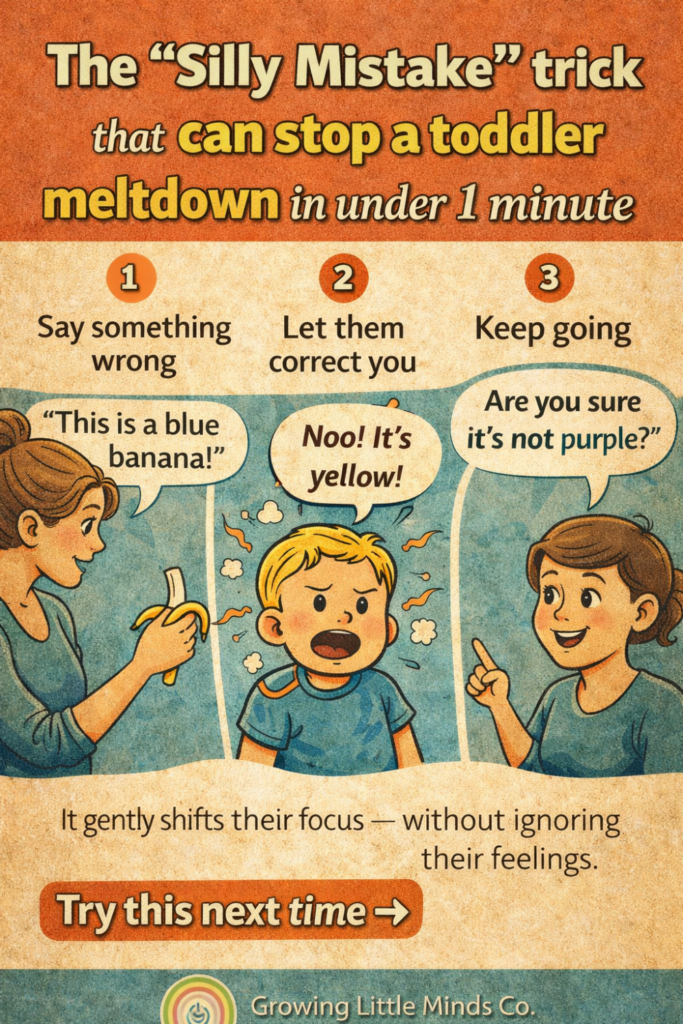
A simple way to shift a meltdown (surprisingly fast)
Sometimes, in the middle of a meltdown, nothing you say seems to land.
This is because your toddler isn’t in a place where they can process language or logic — they’re overwhelmed.
One small thing that can help in those moments is gently shifting their attention.
For example, you might say something intentionally wrong:
“Is that a blue banana?”
Often, your toddler will pause — even briefly — to correct you.
“No! It’s yellow!”
That tiny moment of engagement can help bring them out of the intensity just enough to reset.
It’s not about distracting or dismissing their feelings.
It’s simply a way of giving their brain something else to focus on when everything feels too big.
From there, it often becomes easier to support them calmly.
Alongside small shifts like this, having the right calm-down tools available can make these moments feel much more manageable.
Small things that make a big difference
You don’t need a complicated system.
In most homes, it’s the small shifts — a calming object, a predictable routine, a quieter space — that change how these moments unfold.
A consistent daily rhythm can help more than most parents expect. If your days feel unpredictable, something simple like daily routine can already reduce a lot of friction.
→ A Simple Montessori Toddler Daily Routine for Calm Days
Here are a few tools that tend to help in the moment.
1. Giving their hands something to do
When emotions rise quickly, having something physical to hold or squeeze can make a noticeable difference.
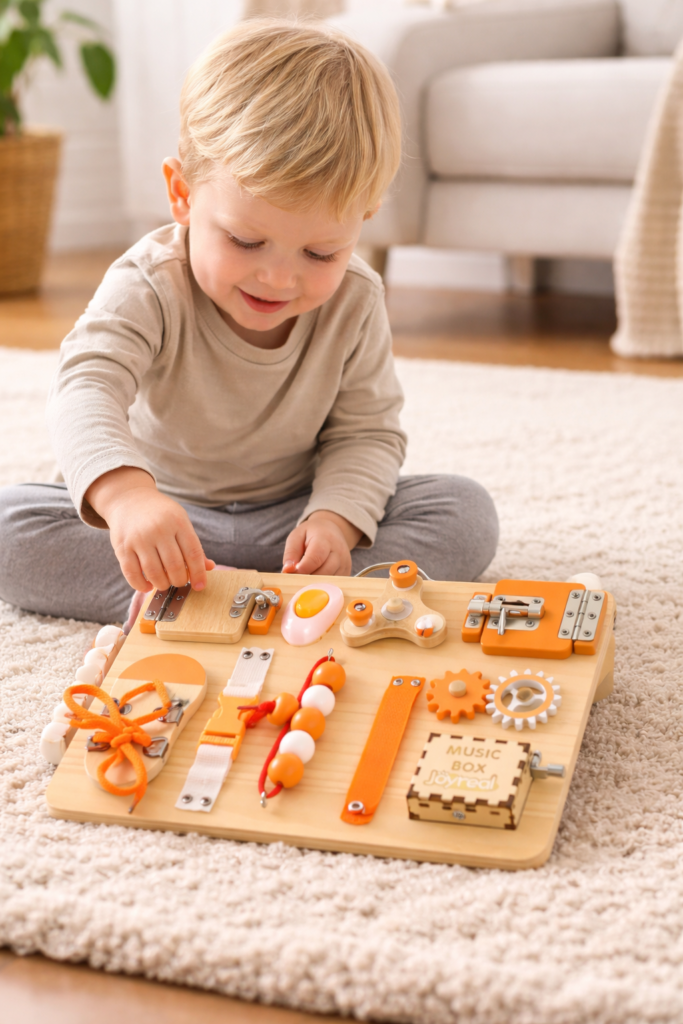
Simple sensory toys — like soft fidget sets or Montessori busy boards — can give your toddler something physical to focus on when emotions rise. Even something like a Montessori busy board gives your toddler something physical to focus on when they’re overwhelmed — which often reduces hitting, throwing, or escalating behaviour.
↗ View a simple, toddler-friendly busy board that actually keeps little hands busy
If your child responds well to sensory input, you might also find Best Montessori Tools for Independent Play — Full Guide helpful, since the same types of materials often support both calming and independent play.
2. A visual way to slow things down
Some toddlers respond better to something they can see rather than something you say.
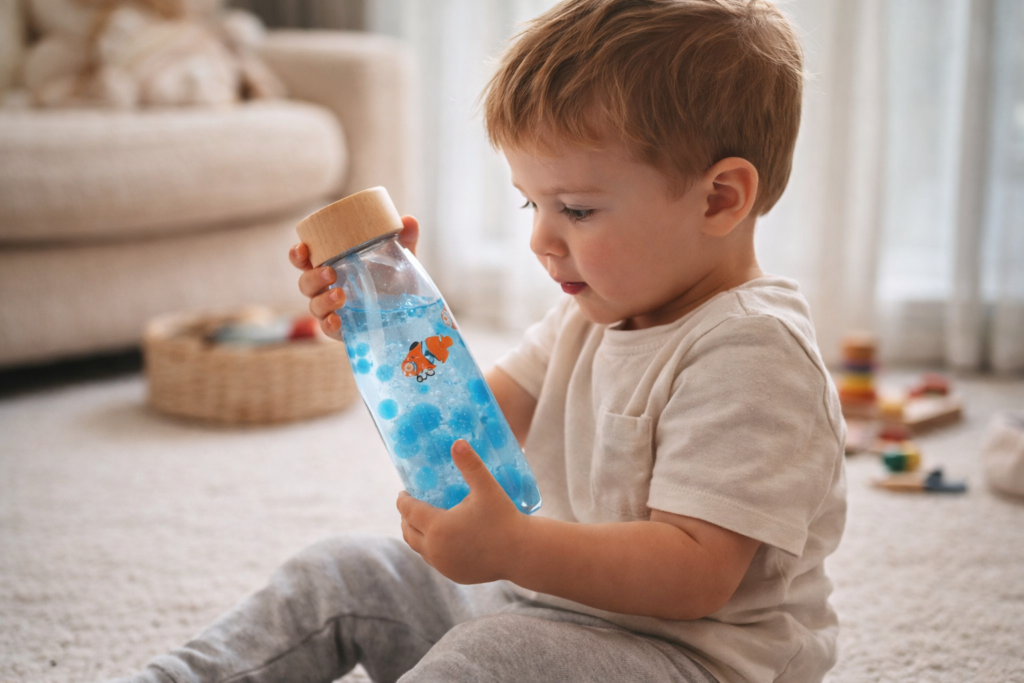
Some toddlers respond better to something they can watch. A simple sensory calm-down bottle — like the Petit Boum style — gives them a slow, repetitive visual to focus on when emotions feel overwhelming. This can help interrupt the spiral and create a small pause before things escalate.
This works especially well for toddlers who:
– get overwhelmed quickly
– struggle with transitions (like stopping play or getting ready for bed)
– find it hard to calm down once upset
Because it doesn’t require them to “do” anything, it can be one of the easiest tools to introduce during a meltdown.
↗ View a simple calm-down bottle that helps slow things down in overwhelming moments
3. Making calming easier to follow
In the middle of a meltdown, instructions like “take a deep breath” don’t usually land.
But when calming is shown visually, it becomes much easier to follow.
Instead of trying to explain what to do in the moment, it often helps to show it. Simple breathing visuals — like these kids’ breathing cards — give your toddler something clear to follow when emotions feel overwhelming. Rather than processing instructions, they can simply trace, watch, and breathe.
This can help slow their breathing and bring their body out of that heightened state — especially when words aren’t landing.
These work especially well for toddlers who:
– get upset quickly and struggle to calm down
– don’t respond to verbal instructions in the moment
– benefit from visual guidance and repetition
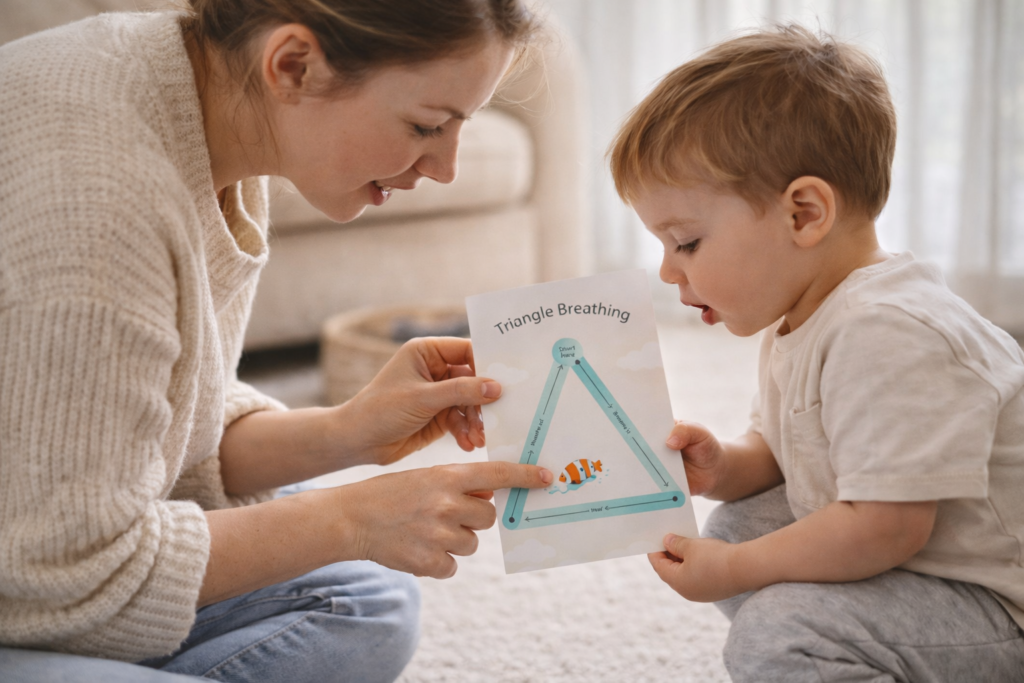
Over time, combining this with simple language shifts — like the ones in What to Say Instead of NO to Your Toddler: Practical Guidance — can make a big difference in how these moments unfold.
4. Keeping comfort close
Sometimes what your toddler needs most isn’t a strategy — it’s reassurance.
A familiar soft toy or comfort object can help your toddler feel safe enough for their emotions to settle. Many toddlers instinctively reach for the same comfort item when they’re overwhelmed — it gives them something predictable in a moment that feels too big. Many toddlers naturally reach for the same soft toy when they’re overwhelmed. Having a soft, realistic comfort toy nearby can make those moments feel more secure and easier to move through, rather than trying to calm them with words alone.
This works especially well for toddlers who:
– become clingy when upset
– struggle with separation or new situations
– need physical comfort to regulate
(We particularly like options from Living Nature — they’re soft, realistic, and hold up well with daily use.)
↗ View a soft, realistic comfort toy that can help your toddler feel safe and soothed

This kind of clinginess often becomes more noticeable during phases when tantrums are happening more frequently. If that’s something you’re seeing, it’s usually connected — and understanding why can make a big difference:
→ Why Toddlers Cling to Mum — Especially When She’s Exhausted.
5. Creating a calm space (not a time-out)
The environment matters more than we often realise.
A small, low-stimulation space — even just a soft corner with a few calming items — can help prevent emotions from escalating further. It gives your toddler somewhere to reset, rather than somewhere they feel sent away.
If you don’t have one yet, you can keep it very simple. How to Create a Simple Calm Corner walks through how to set one up without overcomplicating it.
Interestingly, these spaces often become the same places where independent play starts to grow. If your toddler struggles to play alone, Why Your 18–24 Month Old Toddler Won’t Play Alone can help you understand what’s going on underneath.
6. Helping them name what they feel
A lot of frustration comes from not being able to say what’s wrong.
Emotion flashcards can gently build that language over time. Looking through simple expressions together — even outside of difficult moments — helps your toddler start to connect feelings with words.
As that understanding grows, many toddlers find it easier to express themselves without escalating so quickly.
This becomes especially important during phases where it feels like they’re not listening or pushing boundaries more often — which is often less about behaviour, and more about communication. If you’re in that stage, this can help explain what’s going on: Why Your 2 Year Old Ignores You.
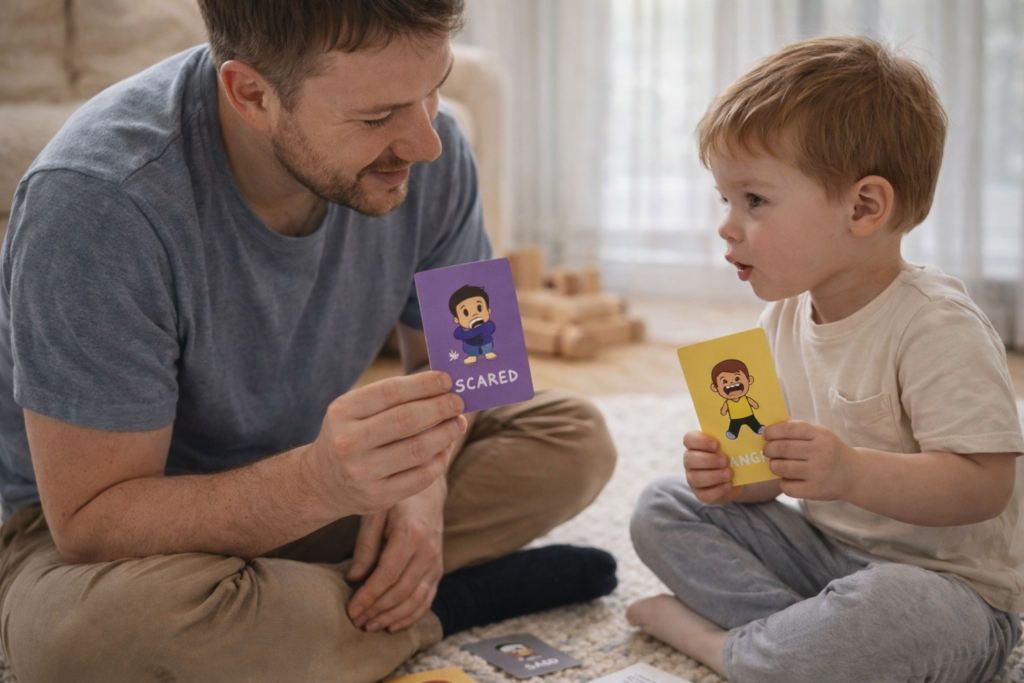
7. Making the day more predictable
Many tantrums happen around transitions — leaving the house, stopping play, going to bed.
When your toddler knows what’s coming next, those moments often feel less overwhelming.
Simple visual routine charts can help with this. Seeing the steps of the day laid out clearly makes transitions more predictable — which often reduces resistance and meltdowns.
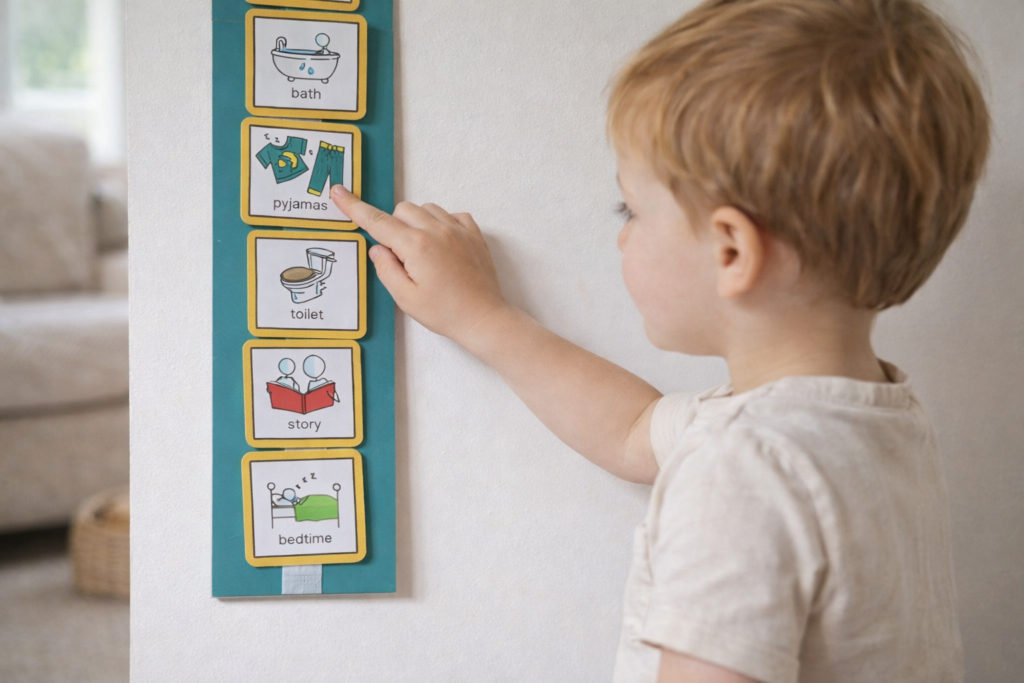
If evenings are particularly difficult, it’s often tied to overtiredness or overstimulation. Why Your Toddler Won’t Go to Sleep (And How to Make Bedtime Easier) breaks this down in a very practical way.
A quieter way to look at tantrums
Most tantrums aren’t about “bad behaviour.”
They’re usually a mix of overwhelm, tiredness, frustration, and not being able to communicate clearly.
Often, it’s not just about what your child is doing — but also how we respond in the moment. If you’ve ever felt your own reactions escalate things, How to Rewire Your Brain to Stay Calm During Toddler Meltdowns is worth reading.
Start small
You don’t need to introduce everything at once.
Often, one small change — a calming object, a more predictable routine, a quieter space — is enough to shift how your days feel.
Start with what feels simplest.
FAQs
What are the best calm-down tools for toddler tantrums?
The best calm-down tools for toddler tantrums are simple, low-stimulation items that help your child regulate emotions. Sensory toys, calm-down bottles, breathing visuals, comfort toys, and routine charts are often the most effective because they support your toddler without overwhelming them.
How do calm-down tools help toddler tantrums?
Calm-down tools help toddler tantrums by giving your child a way to release frustration and feel more in control. Instead of trying to stop the behaviour, these tools support emotional regulation, which makes tantrums shorter and easier to manage over time.
What should I do during a toddler tantrum?
During a toddler tantrum, stay close, keep your response calm, and avoid trying to reason in the moment. Simple tools like sensory items or visual prompts can help your child settle, especially when paired with a predictable routine.
At what age do calm-down tools work for toddler tantrums?
Most calm-down tools for toddler tantrums can be introduced from around 18 months. Younger toddlers respond best to sensory and comfort-based tools, while older toddlers (2–3+) can begin using visual supports like emotion cards and breathing prompts.
Can calm-down tools reduce toddler tantrums long term?
Yes — calm-down tools for toddler tantrums can reduce frequency and intensity over time. As your child learns to recognise feelings and regulate emotions, they rely less on meltdowns to express themselves.
Do I need all of these calm-down tools?
No — you don’t need every calm-down tool for toddler tantrums. Starting with one or two simple options is often enough to see a difference. The key is consistency, not quantity.
If you’re navigating more than tantrums
These challenges are often connected.
You might also find these helpful: