Montessori Bedroom for Toddlers (1–3 Years): Full Setup Guide
If you’re setting up a Montessori bedroom for toddlers, it does not need to look perfectly aesthetic.
It simply needs to work well for your child.
A Montessori bedroom is not really about decor.
At its core, it is about independence.
The goal is simple: creating a space your toddler can safely understand, move through and use with gradually less adult help.
And often, when the environment becomes easier for toddlers to navigate independently, daily friction decreases naturally too.
Disclaimer: This post contains affiliate links. As an Amazon Associate I earn from qualifying purchases at no extra cost to you.
Why the Environment Matters So Much
Traditional nurseries are usually designed around adult convenience.
Montessori-inspired bedrooms are designed around the child’s experience of the space.
When toddlers can:
- move safely
- access what they need
- recognise where things belong
- participate in daily routines independently
the room often begins feeling calmer and more predictable for everyone.
Toddlers build understanding through repetition and movement. When the environment supports those instincts instead of constantly restricting them, cooperation often becomes easier naturally.
A Simple Montessori Bedroom Layout
One of the most common misconceptions about Montessori bedrooms is that they require lots of specialised furniture or carefully curated Montessori materials.
In reality, our daughter’s room remained intentionally simple.
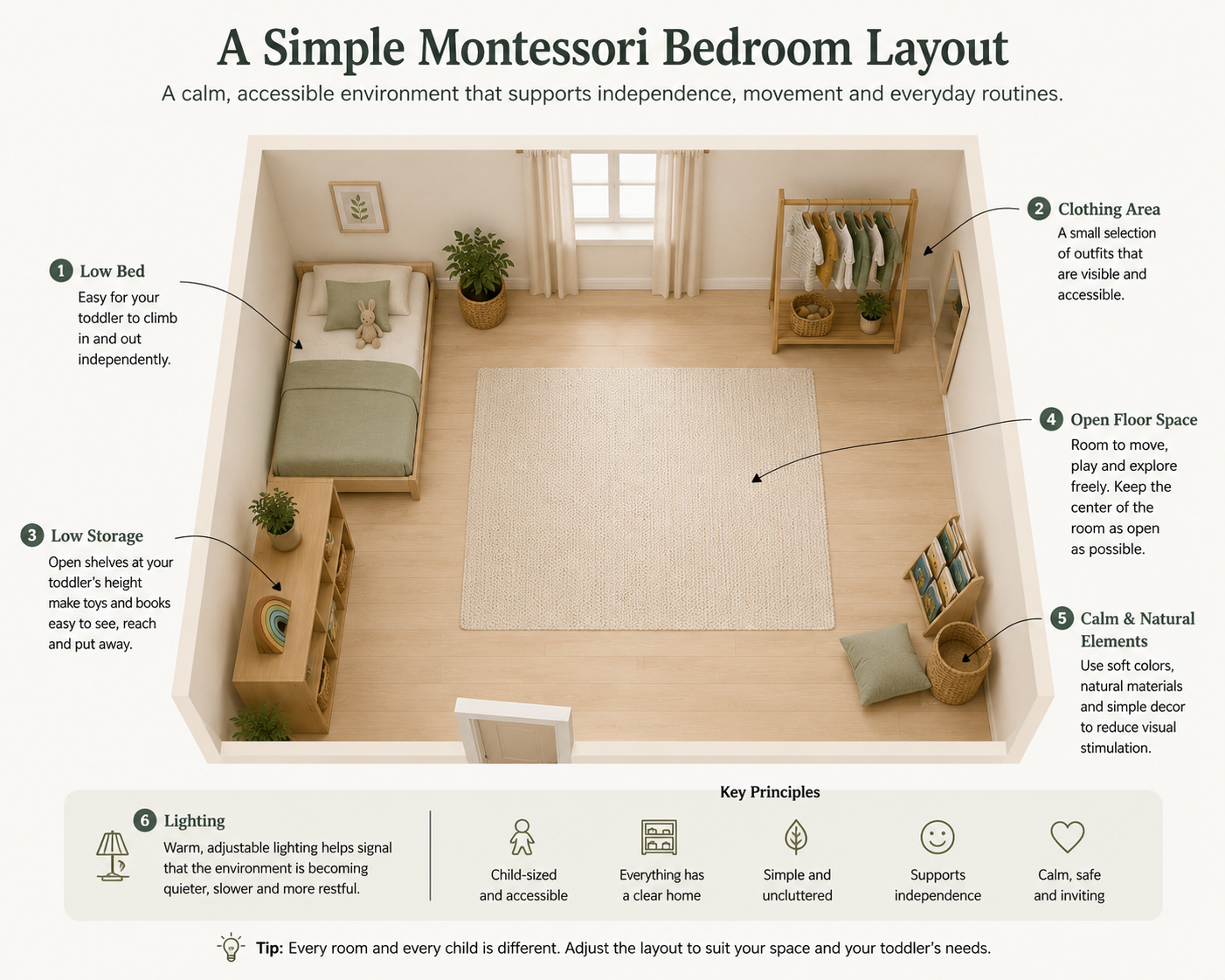
Rather than filling the space with products, we focused on a few elements that supported independence, movement and everyday routines:
- a low floor bed she could access independently
- a small clothing area with a limited number of outfit choices
- low toy and book storage
- a soft rug for floor play
- warm, adjustable lighting
- a calm, uncluttered layout with plenty of open space
The goal was never to fill the room.
It was to create enough space for movement, independence and everyday life.
We found that keeping the bed, storage and floor space clearly defined made the environment feel easier for our daughter to understand and navigate independently. Toys had a home, books were easy to reach and there was still plenty of open space for movement and play.
Over time, we realised that the overall simplicity of the room mattered far more than any individual piece of furniture.
If you’re unsure where to start, focus on simplicity first.
A comfortable sleep space, accessible storage and a calm layout will usually have a far greater impact than adding more furniture or Montessori materials.
Start with the bed
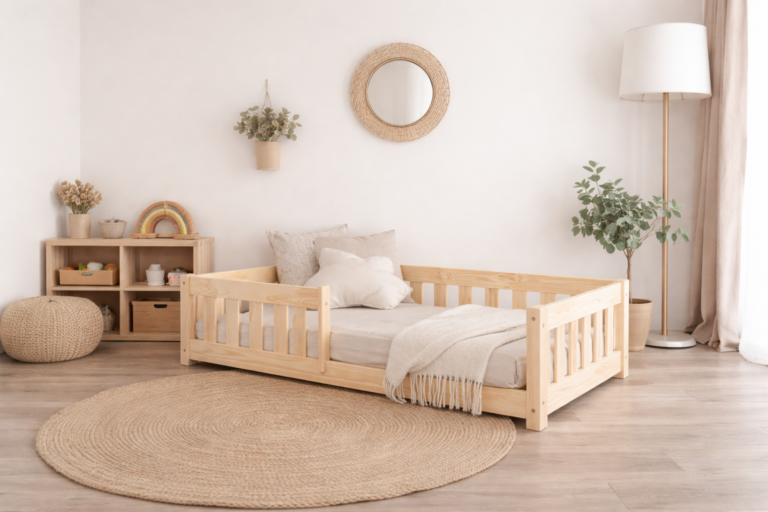
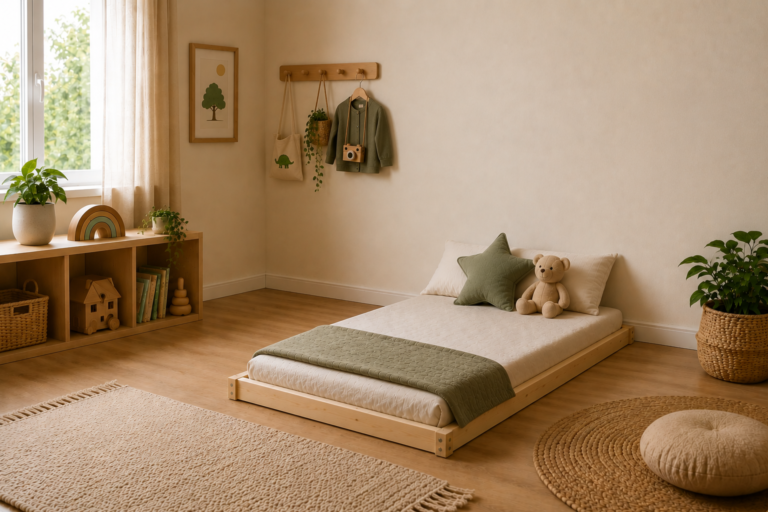
The most recognisable feature of a Montessori toddler bedroom is usually the low bed or floor bed.
But the purpose is not aesthetic.
It is accessibility.
A low bed allows toddlers to climb in and out independently rather than waiting to be lifted or contained behind rails.
And while the change seems small, it quietly supports coordination, balance and body confidence through repetition.
Most importantly, it gives toddlers the experience of:
“I can do this myself.”
That feeling becomes increasingly important between roughly 18 months and 3 years, when many children naturally begin seeking more autonomy in everyday routines.
Keep the Room Visually Calm
Toddlers are far more affected by visual stimulation than adults often realise.
Crowded shelves, bright colours and too many visible toys can quietly increase sensory load — especially toward the end of the day when the nervous system is already tired.
Montessori-inspired bedrooms often feel quieter because the environment is more visually intentional.
Usually, that means:
- softer colours
- clearer surfaces
- fewer visible materials
- open space to move comfortably
- furniture that feels simple and grounded
Not empty. Not perfectly minimalist.
Just easier for the child to process.
And when the room feels calmer visually, many toddlers naturally settle more easily too.
That is also one reason low wooden floor beds work beautifully in Montessori-style spaces. They tend to feel quieter and less imposing than heavily themed toddler beds, while still supporting independence and freedom of movement.
We generally prefer floor beds that are:
- low and easy to access independently
- visually simple
- made from natural materials
- sturdy enough to remain part of the room for years
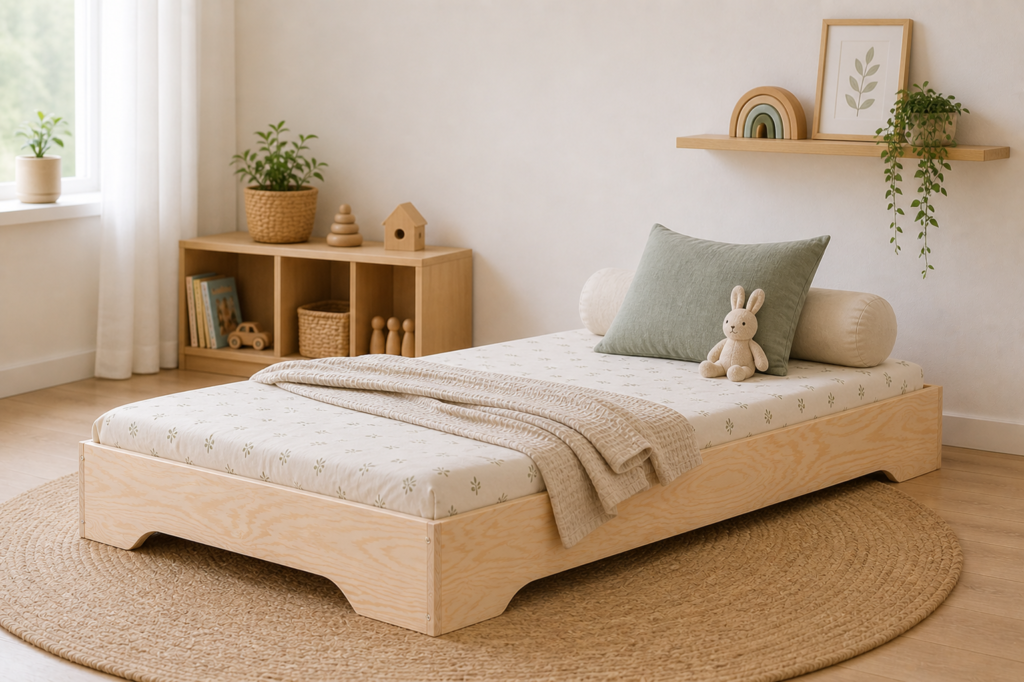
A well-designed wooden floor bed often becomes less of a “toddler product” and more of a calm foundation for the entire room.
Recommended: a simple wooden Montessori-style floor bed that supports independent movement while keeping the bedroom feeling calm, grounded and uncluttered.
Make Everyday Routines Accessible
One of the most powerful parts of a Montessori bedroom is that toddlers can participate in daily life more independently.
Simple changes often make the biggest difference:
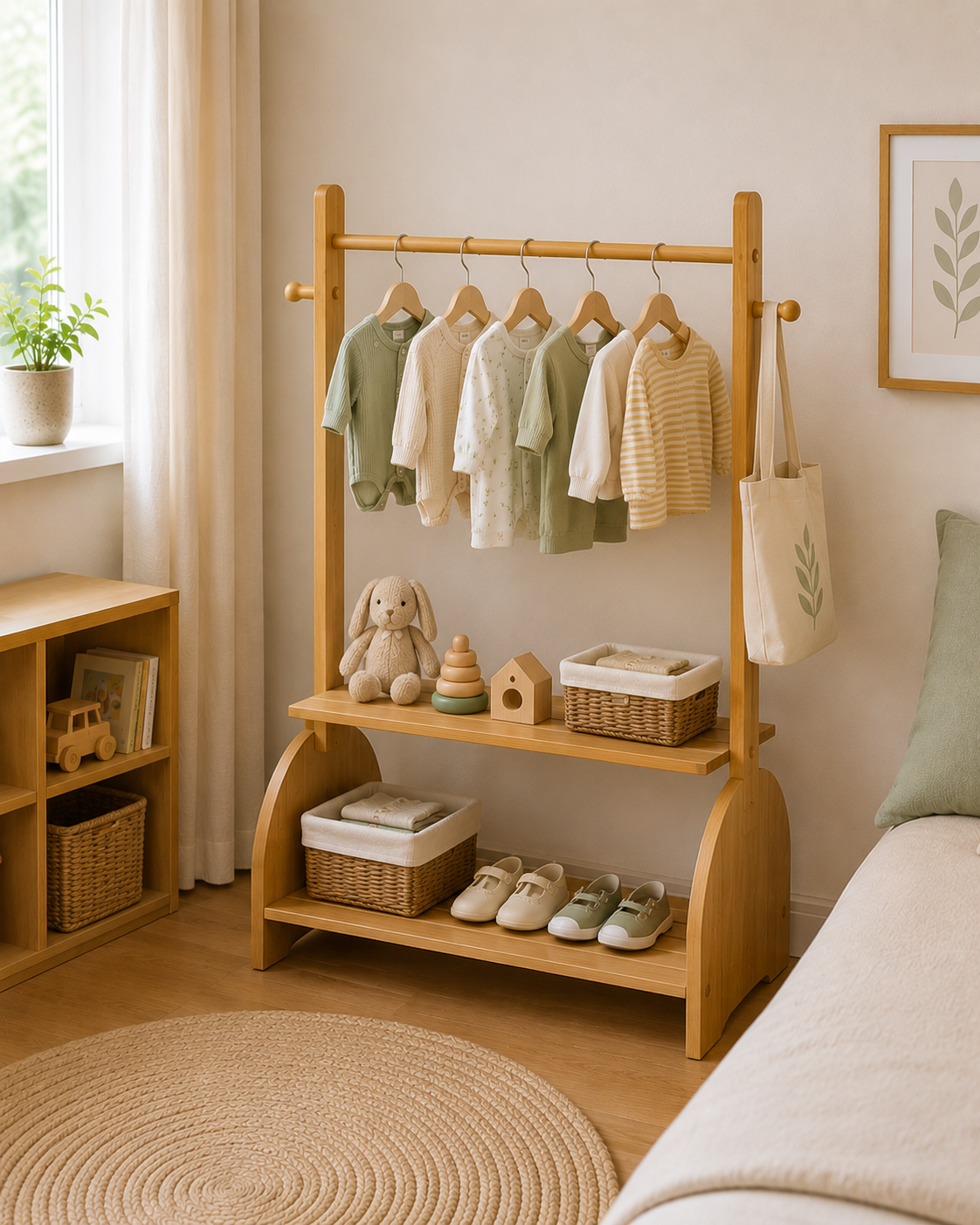
- a low clothing rail
- accessible baskets
- a child-height mirror
- low book displays
- open shelving
- a small chair or stool
When furniture fits the child’s scale, the room becomes genuinely usable rather than simply decorative.
Often, independence begins in very small moments: choosing between two outfits, putting socks into a basket or attempting to hang up a cardigan independently.
Between 1 and 3 years, these small opportunities often matter more than buying additional Montessori materials. The environment itself becomes the learning tool.
Instead of:
“Put this on.”
The environment naturally allows for:
“Would you like this one or this one?”
That subtle shift changes the dynamic completely.
The room begins supporting cooperation rather than constant adult direction.
We generally prefer simple open clothing rails because they allow toddlers to clearly see what is available without becoming visually overwhelmed by too many choices at once.
Recommended: a simple wooden toddler clothing rail that keeps a small number of outfits visible, accessible and easy to manage independently.
Keep Furniture Child-Sized and Accessible
Montessori bedrooms are often described as “accessible,” but for toddlers, accessibility usually works best when it is intentionally simplified.
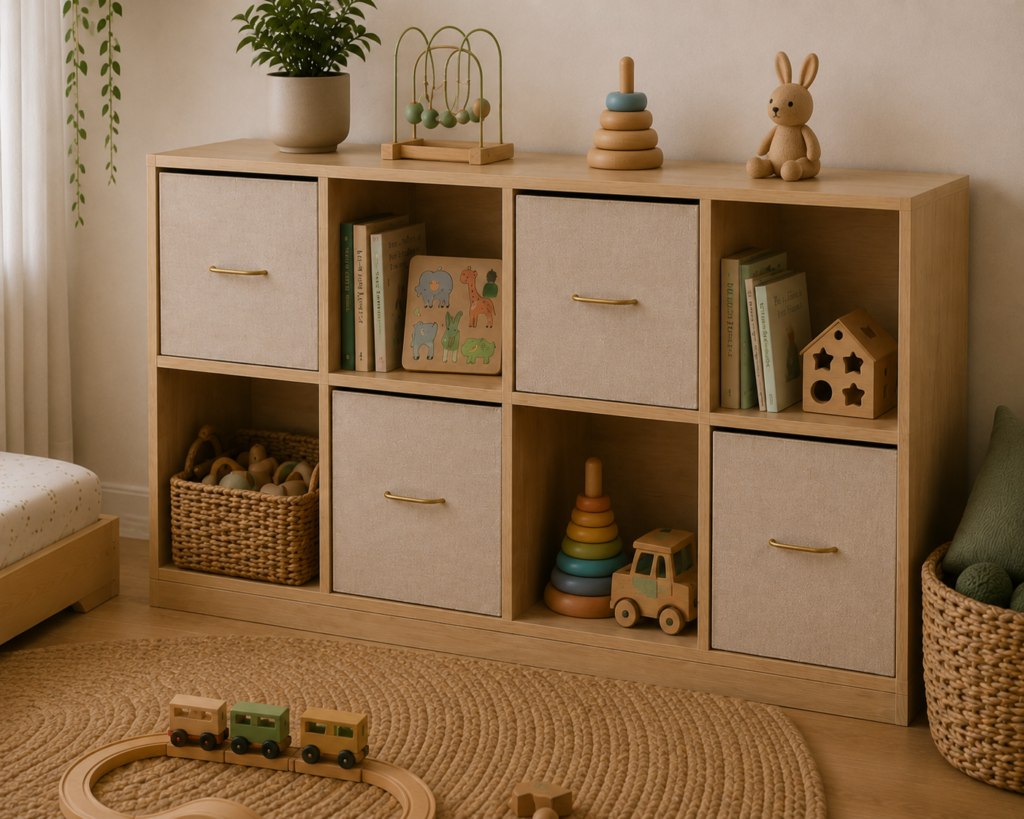
Low shelves, accessible book displays and appropriately sized furniture help children use the room more independently because the environment is easier to understand and navigate without constant adult assistance.
Open shelving works particularly well because toddlers can see what is available without needing to pull everything out. Visibility often reduces frustration and makes it easier for children to participate in everyday routines.
That does not mean making everything accessible.
A few clothing options, a small number of books and a limited selection of toys is usually enough. Too many choices can quickly become overwhelming.
We prefer using a low storage unit with a combination of open shelves and baskets because it keeps materials accessible while helping the room feel calm, organised and easy to navigate independently.
Rather than displaying every toy at once, we rotate materials and keep only a small selection available. This helps maintain interest while preventing the space from becoming visually overwhelming.
The same solid wood storage unit originally started life in our daughter’s nursery storing clothing, blankets and everyday essentials. As she grew, it transitioned naturally into a low toy and book shelf, which is one of the reasons it remained one of our most useful nursery purchases long after the baby stage.
Looking back, choosing furniture that could evolve alongside her changing needs was far more valuable than buying separate storage solutions for every stage.
Create a “Yes Space”
A Montessori bedroom works best when toddlers can move through the environment safely and confidently without constantly hearing “no.”
That usually means:
- anchored furniture
- no reachable hazards
- clear walking space
- accessible materials
- calm, predictable boundaries
When children are able to explore their environment more freely, confidence often grows naturally alongside independence.
Some families also find it helpful to create a small, calm space within the bedroom where toddlers can regulate, rest or reset when things feel overwhelming.
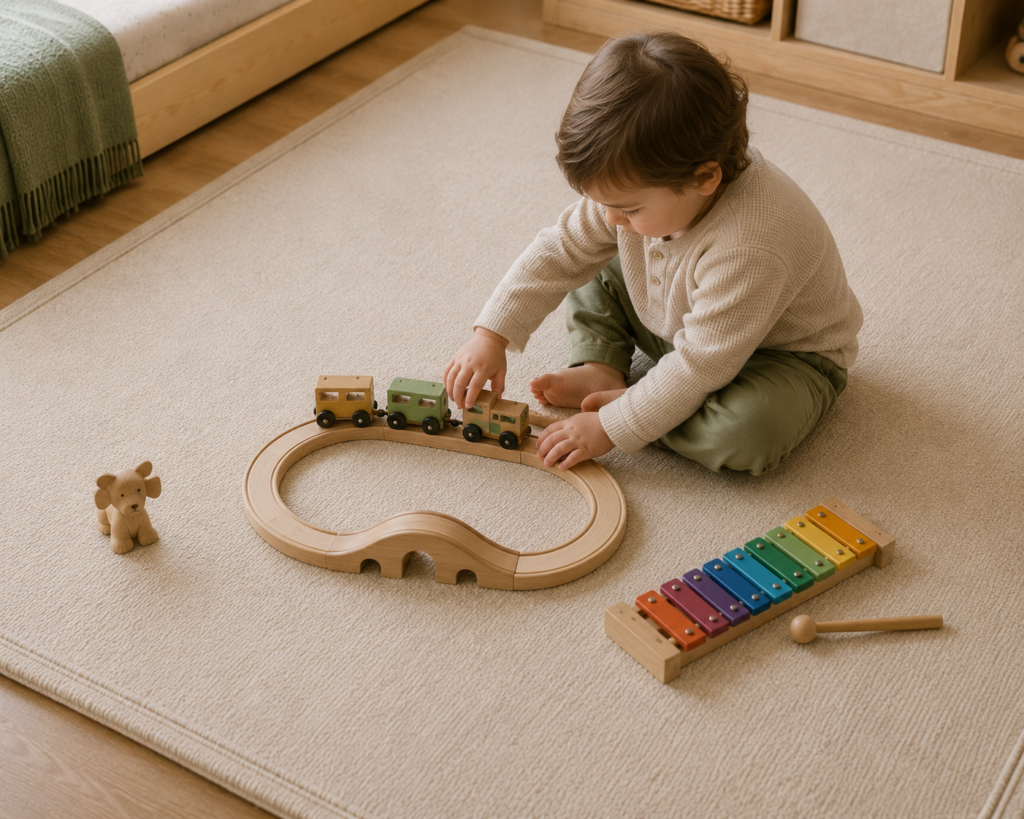
We also tend to prefer simpler rugs and play mats over highly colourful designs or busy patterns. While every child is different, calmer surfaces often help the room feel less visually stimulating and allow toys, books and activities to take centre stage.
Importantly, a “yes space” does not mean unlimited freedom.
It means the environment has been prepared thoughtfully enough that the child can move, explore and participate more independently within safe and manageable limits.
And for many toddlers, that balance between freedom and predictability is what helps the room feel secure rather than restrictive.
We found that simple, neutral rugs often became the natural centre of floor play, reading and independent activity.
View soft, toddler-friendly rug
Keep Lighting Soft and Adjustable
Lighting shapes the mood of a room far more than most parents expect.
Bright overhead lights tend to keep the body alert and visually stimulated, even when toddlers are already tired.
And sometimes what looks like “extra energy” before bed is actually a nervous system responding to too much stimulation throughout the day.
Montessori-inspired bedrooms often feel calmer partly because the lighting changes more gently alongside the rhythm of the evening.
Soft, warmer light helps signal that the environment is becoming quieter, slower and more restful.
Rather than the room abruptly switching from full brightness to darkness, the transition into sleep feels more gradual and predictable.
This can be especially helpful for toddlers who are sensitive to bright environments or find bedtime overstimulating.
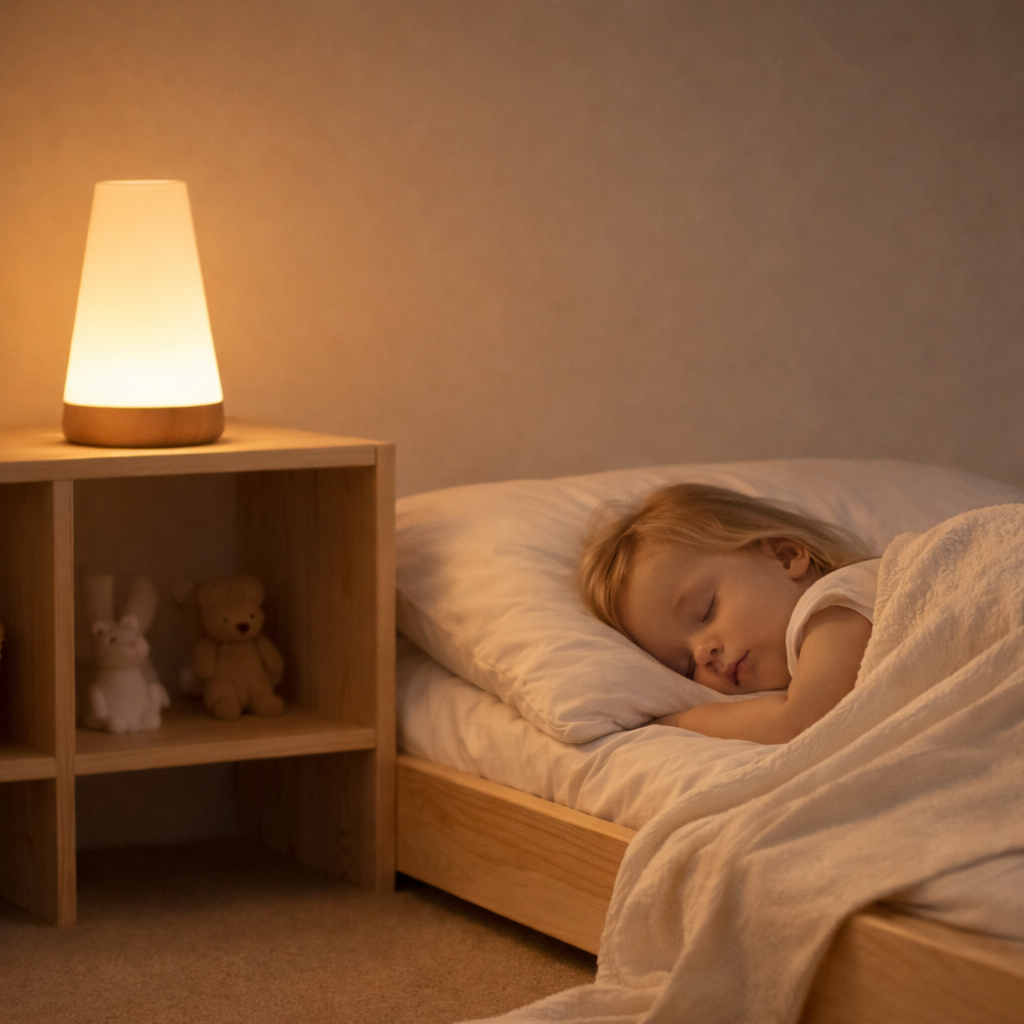
We generally prefer dimmable lights with a soft ambient glow rather than harsh overhead lighting or brightly coloured night lights.
It’s worth remembering that not every toddler needs a night light. Some children sleep perfectly well in complete darkness, while others seem to feel more secure with a small amount of light during bedtime or night waking.
If you’re unsure whether a night light might help, we’ve put together a guide that explores when toddlers may benefit from one, what features are worth looking for, and a few simple low-stimulation options that work well for sleep:
→ Best Night Lights for Toddlers
Recommended: a dimmable night light that creates a calm, adjustable glow for quieter evenings and gentler bedtime transitions.
What a Montessori bedroom is not
It’s not expensive.
It’s not perfectly styled.
It’s not a race to remove everything.
It’s simply:
Accessible
Predictable
Calm
Child-sized
When the room works for your toddler, you’ll notice something subtle:
Less resistance.
More cooperation.
More independent moments.
Not because you forced it.
But because the environment supported it.
The bigger picture
A Montessori bedroom is really just one part of a much larger idea:
children often thrive in environments designed around their developmental needs rather than constant adult control.
When toddlers can move safely, make small choices independently and participate more naturally in everyday routines, frustration often decreases for everyone.
The room stops feeling like a place built for the child and starts becoming a space they can genuinely use themselves.
And interestingly, many families notice that when the environment supports more independence during the day, bedtime resistance often softens too.
Not because the child suddenly becomes “better” at sleep —
but because the nervous system feels calmer, safer and less restricted overall.
Often, the smallest environmental changes create the biggest shifts over time.
If you’re currently struggling with sleep, you may find this helpful: Why Your Toddler Won’t Go to Sleep (And How to Make Bedtime Easier).
Frequently Asked Questions: Montessori Bedroom for Toddlers
Can a Montessori bedroom help reduce bedtime resistance?
A Montessori bedroom will not eliminate bedtime struggles, but a calm, predictable environment can make transitions easier. Many toddlers settle more comfortably when the room feels simple, familiar and easy to navigate independently.
How many clothes should be available on a Montessori clothing rail?
Most Montessori families keep only a small number of outfits accessible at one time. Limiting choices helps toddlers participate more independently without feeling overwhelmed by too many options.
Should toys be kept in a toddler’s bedroom?
Yes, but usually in limited quantities. Many families find that keeping only a small number of toys visible helps maintain a calmer environment while encouraging deeper engagement with the materials that are available.
What age should a Montessori bedroom start?
Many Montessori principles can be introduced from infancy, but bedrooms often become noticeably more functional between 1 and 3 years as toddlers begin moving independently, making choices and participating more actively in daily routines.
Does a Montessori bedroom need to be minimalist?
Not necessarily. Montessori is less about owning fewer things and more about creating an environment that feels organised, accessible and easy for a child to understand. The goal is clarity, not emptiness.
You Might Also Find Helpful