Best Montessori Toys for 2 Year Olds That Actually Build Focus & Independent Play
Around their second birthday, many toddlers seem caught between two powerful instincts: wanting to do everything themselves, yet becoming deeply frustrated when their hands can’t quite keep up with what their minds imagine.
One moment they’re insisting on pouring their own drink. The next, they’re asking for help because the tower won’t stay upright or the puzzle piece won’t fit.
It’s a stage full of determination, repetition and discovery—and it’s often the moment many parents begin wondering whether they have the right toys.
Surprisingly, the toys that tend to hold a two-year-old’s attention the longest are rarely the ones with the most features.
If your toddler struggles to play alone, read:
→ Independent Play Tools for Toddlers (Simple Montessori Ideas That Work)
Disclaimer: This post contains affiliate links. As an Amazon Associate I earn from qualifying purchases at no extra cost to you.
What 2 Year Olds Really Need From Toys
Around this age, toddlers are developing independence, problem-solving skills, fine motor control and early imagination all at once.
The toys that tend to hold their attention longest are usually the ones that challenge them just enough to stay engaging without becoming overwhelming.
That balance is often where concentration, confidence and more independent play begin.
And in many cases, fewer toys actually helps. Too many available choices can make it harder for toddlers to settle deeply into play.
A small rotation — often around 6–10 toys available at once — usually feels calmer and easier for young children to focus on.
If you want to set this up more simply:
→ Montessori Toy Rotation (Simple System That Works)
Best Montessori Toys for 2 Year Olds
The toys below are the ones that tend to work especially well at this age because they support repetition, movement, concentration and more independent play without overwhelming toddlers with too much stimulation.
1. Wooden Screwdriver Board
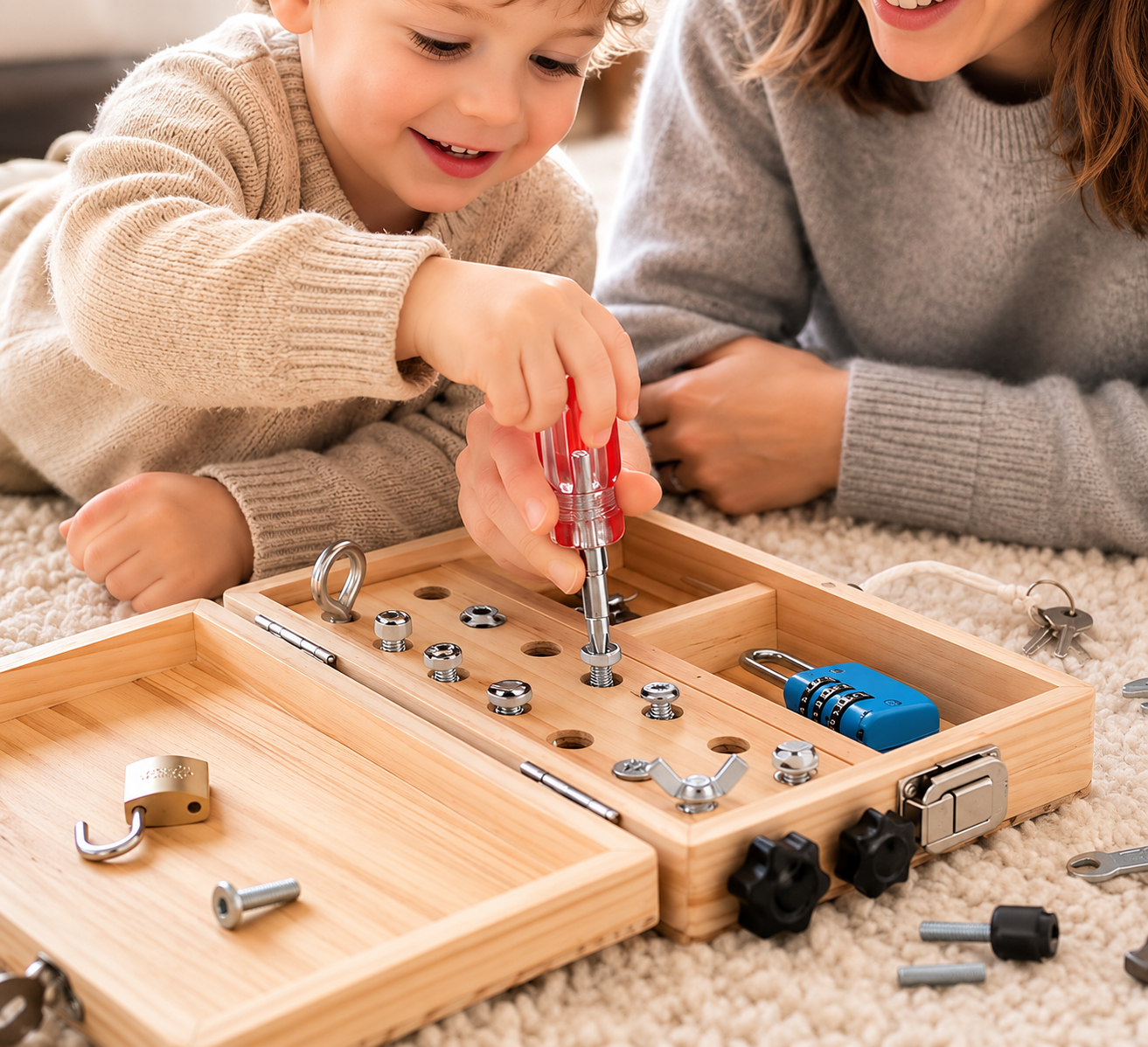
Real locks, keys and screwdrivers have a particular appeal at this age, giving toddlers something that feels a little more grown-up while putting their developing coordination to work.
Our daughter could spend ages tightening screws, opening latches and unlocking padlocks before starting all over again. We like the Lehoo Castle Wooden Screwdriver Board because it combines fine motor practice and problem-solving in one compact activity that’s also easy to take on journeys.
Best for: Fine motor skills, problem-solving and focused play.
2. Practical Life Activities (Pouring, Scooping, Transferring)
Around age 2, practical life activities often hold a toddler’s attention far longer than expected.
Pouring water, spooning rice or transferring objects between bowls may look simple to adults, but for toddlers these kinds of repetitive movements feel deeply absorbing.
They also naturally support coordination, concentration and growing independence in a very calm, hands-on way.
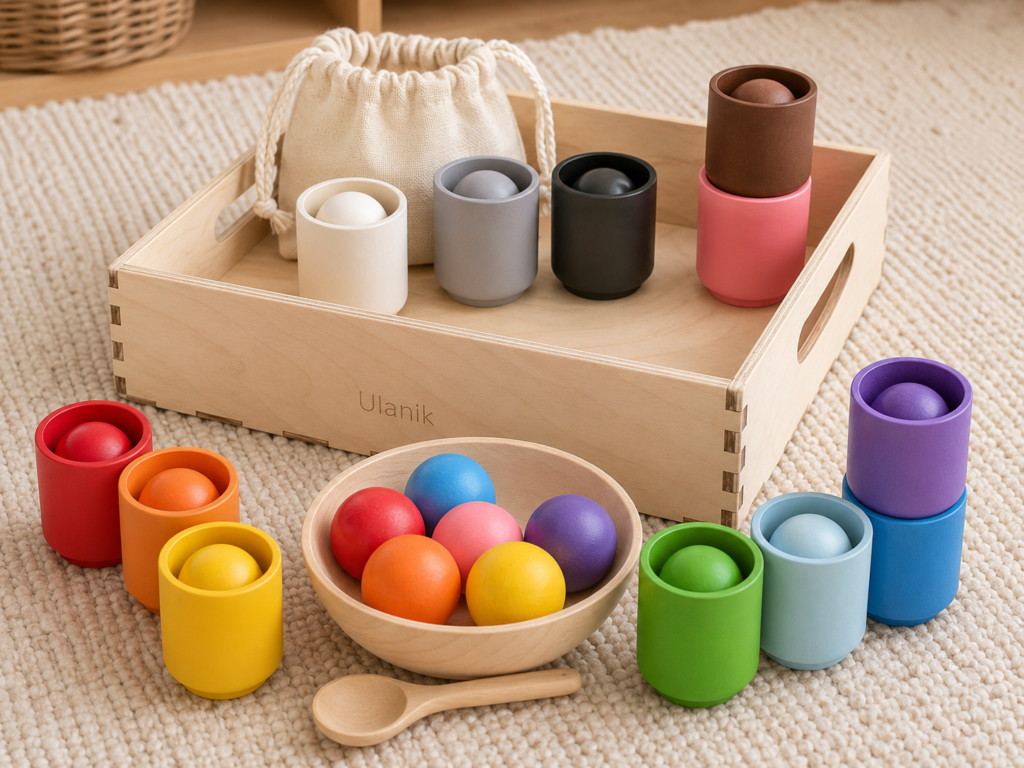
We liked the Leron pouring and scooping tools because the child-sized pieces make these activities easier to leave set up and accessible throughout the day, without needing much preparation each time.
These kinds of activities tend to work especially well for toddlers who enjoy repeating the same movements again and again.
These kinds of activities also fit naturally into simple Montessori-style routines throughout the day.
→ Montessori Daily Routines for Toddlers
3. Simple Pretend Play Sets
One of our favourite milestones around age two is watching pretend play begin to mirror everyday life.
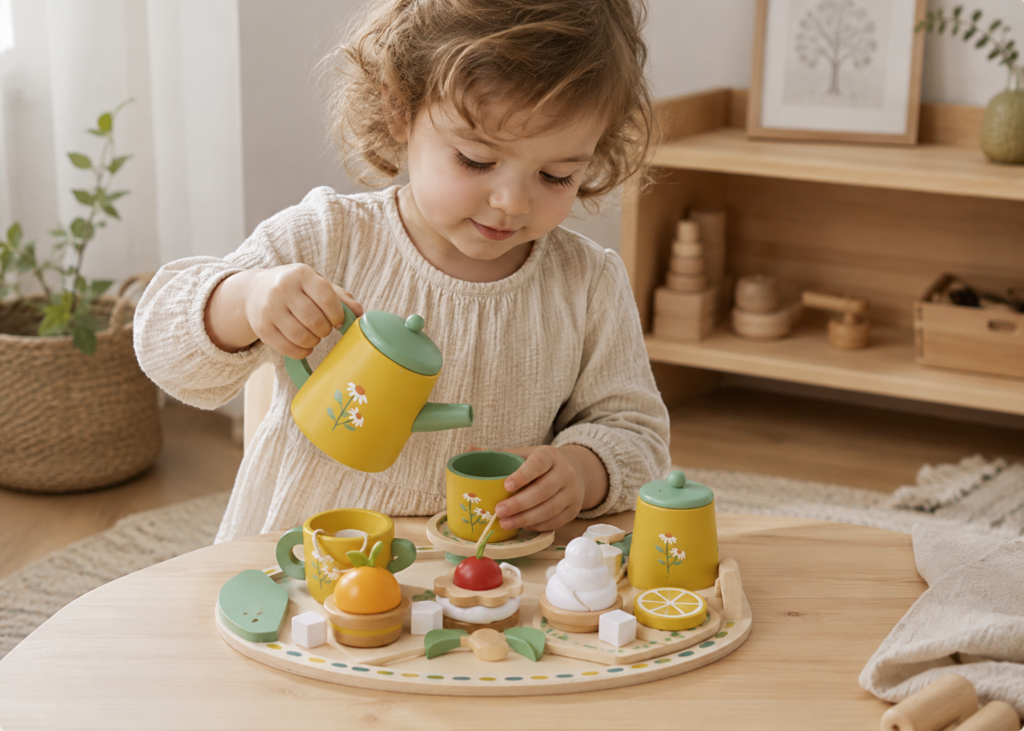
Suddenly you’re being invited to tea, teddy needs feeding before breakfast, and tiny hands are carefully recreating the routines they’ve watched a hundred times before.
This kind of imaginative play quietly supports language, confidence and social understanding, while still feeling entirely child-led.
One toy that has remained a favourite in our home is the Airlab Wooden Tea Set. Our daughter first started playing with it shortly after her first birthday, and now, approaching three, it has become part of our daily routine. Almost every time one of us walks through the front door, we’re greeted with a carefully prepared cup of imaginary tea before we’ve even had chance to take our shoes off.
That, perhaps, says more about a toy than any list of features ever could.
4. Magna-tiles
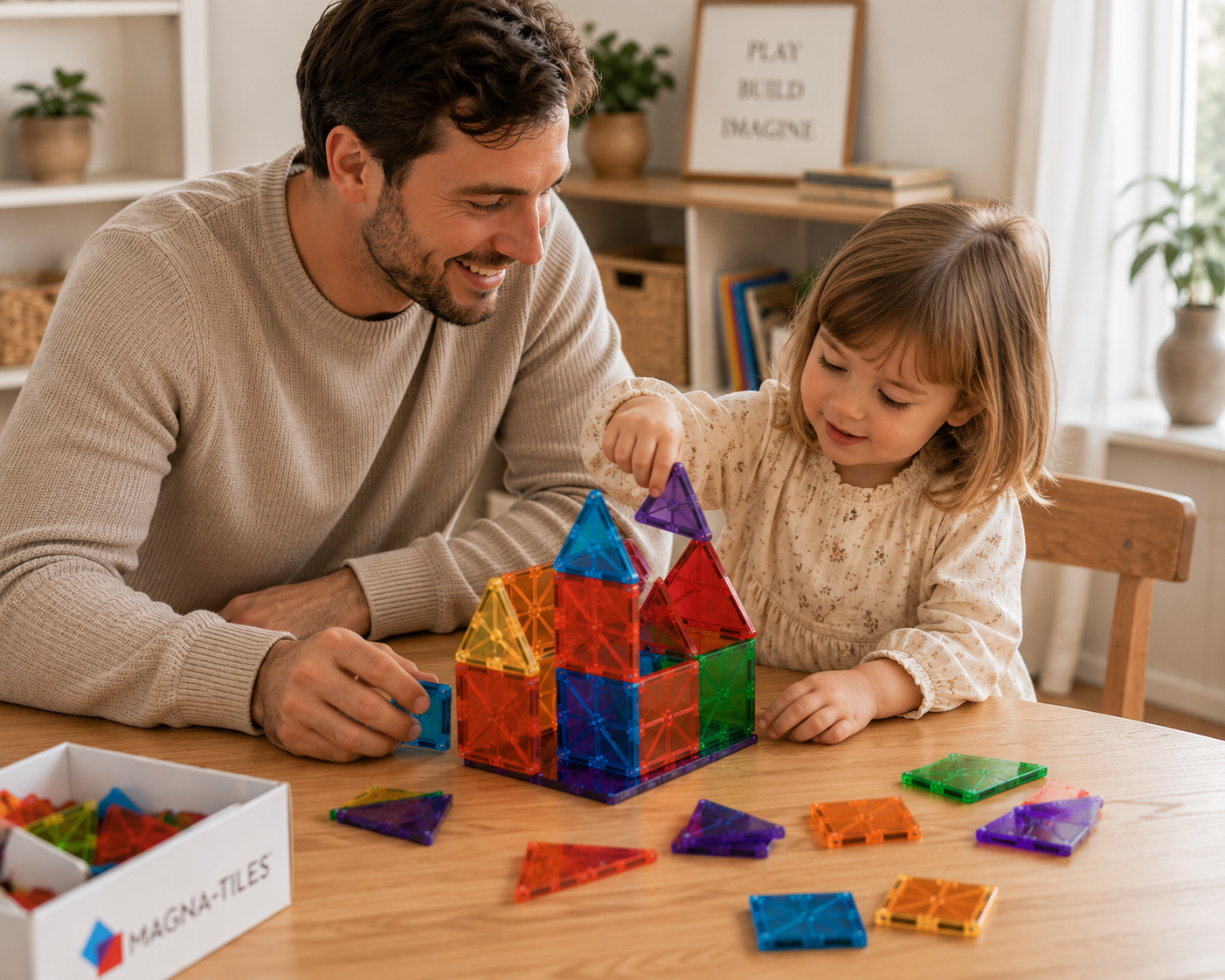
Around age two, building starts becoming much more interesting — and MAGNA-TILES are a lovely step up from the stacking and shape-sorting toys younger toddlers may already have.
The magnetic pieces are easy for small hands to connect, but there’s no single way to use them. Towers gradually become houses, roads and increasingly ambitious creations as skills and imagination develop, making them a toy with plenty of longevity.
Best for: Building, spatial awareness, problem-solving and open-ended play.
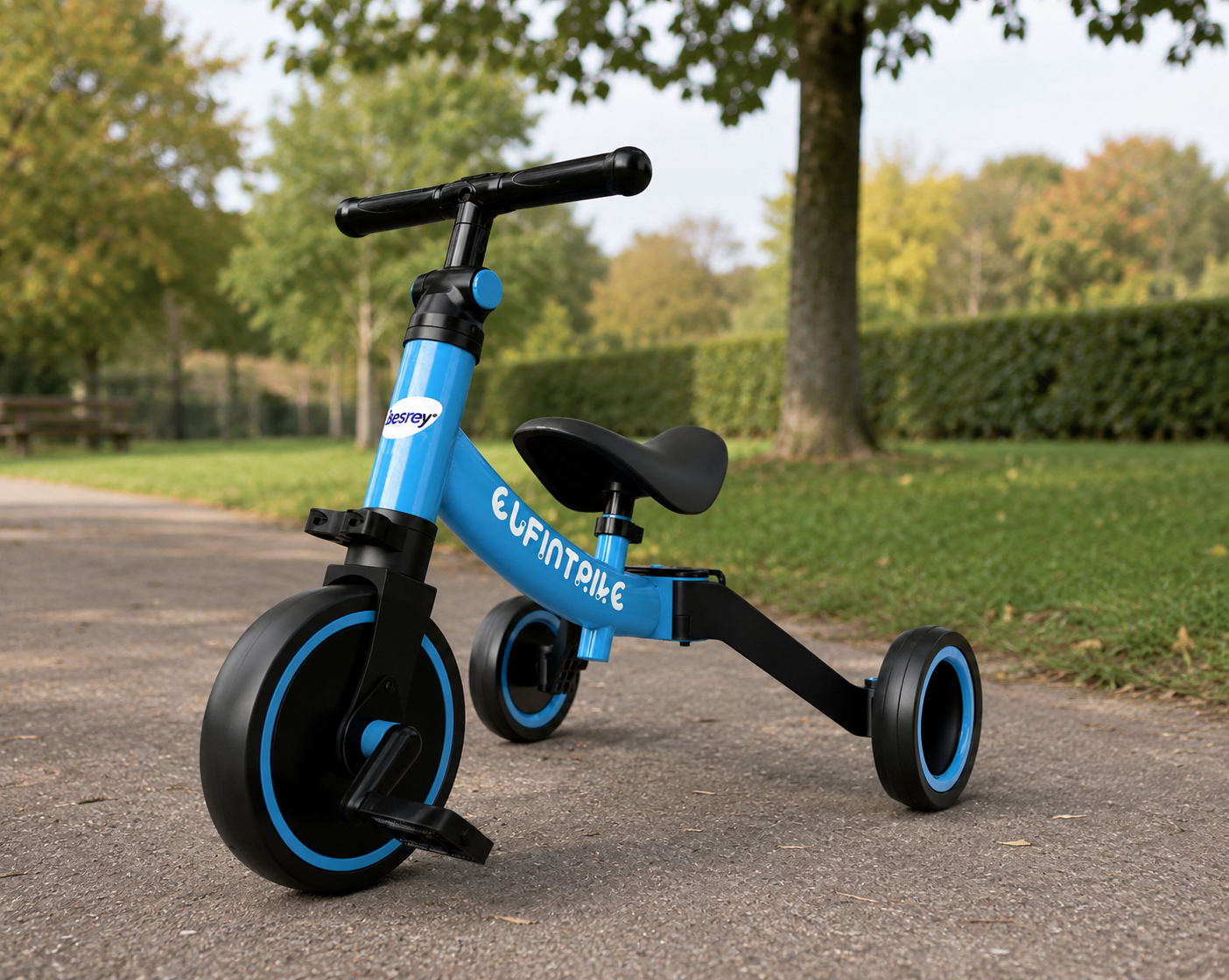
5. Besrey 5-in-1 Toddler Tricycle
Designed to grow with children from around 12 months to 4 years, the Besrey tricycle can be adapted as their balance, confidence and pedalling skills develop. The larger frame feels sturdy without making the bike cumbersome, while the soft saddle and non-slip handlebars make it comfortable for everyday rides.
We particularly like the 70° limited steering, enclosed wheels and curved carbon-steel frame, which are thoughtful features for younger riders finding their feet. The pedals can also be removed and the riding mode changed as their skills progress, making this a practical first bike that should get considerably more use than a single-stage ride-on.
6. BRIO Train Set
Some toys are quickly outgrown. Others seem to become more interesting as toddlers grow.
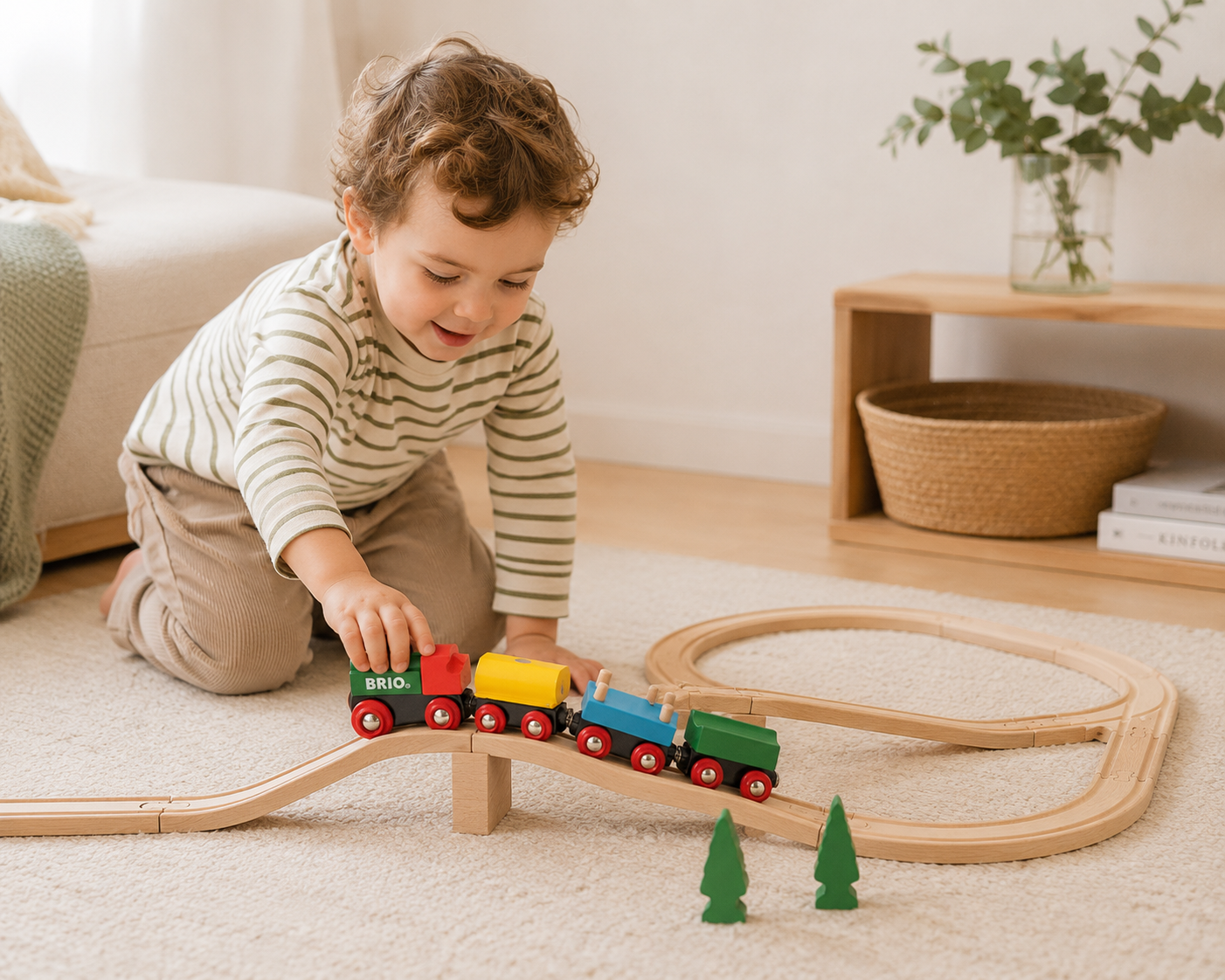
The BRIO Train Set is a lovely choice for 2-year-olds because it starts with something wonderfully simple—connecting tracks and moving trains—while leaving plenty of room for more imaginative play later.
Its FSC-certified wooden railway system can also be expanded with additional trains, bridges, stations and tunnels, all designed to work together. At two, it might be all about pushing a train around the track; later, that same set can become an entire world of stations, journeys and stories.
It’s a classic open-ended toy with plenty of longevity, encouraging coordination, problem-solving and imaginative play without needing flashing lights or screens.
7. Fine Motor Skill Toys
Somewhere around their second birthday, many toddlers begin slowing down.
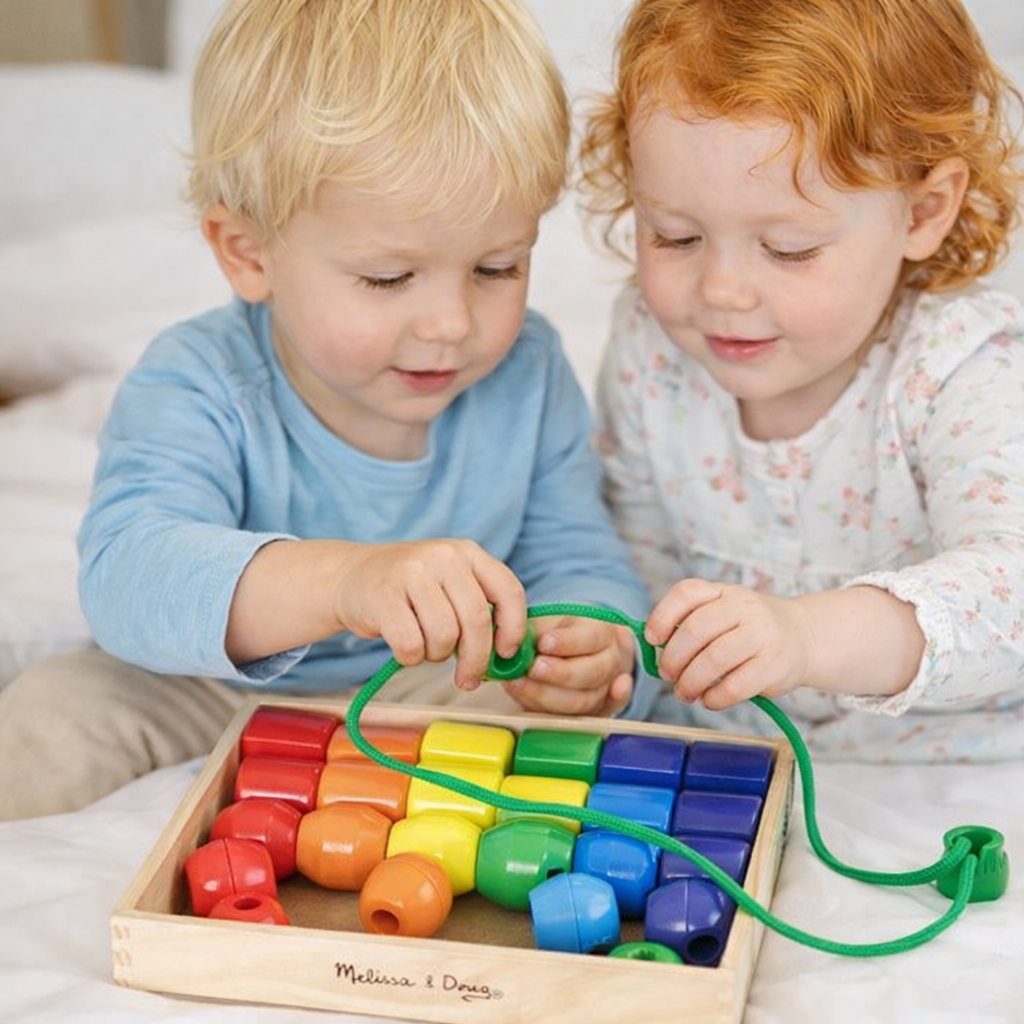
Instead of racing from one activity to the next, they become absorbed in the small movements of everyday play—threading a bead onto a lace, carefully posting an object through a hole or concentrating as tiny hands learn to work together.
These quieter activities ask for patience rather than speed. They gently strengthen hand coordination, concentration and the controlled movements children will continue refining for years to come.
One set we’ve particularly enjoyed is the Melissa & Doug Wooden Lacing Beads. The large, colourful beads feel manageable for little hands while still offering enough challenge to keep toddlers engaged as their confidence grows. It’s the kind of activity that often begins with just a few beads before gradually becoming longer periods of calm, focused play.
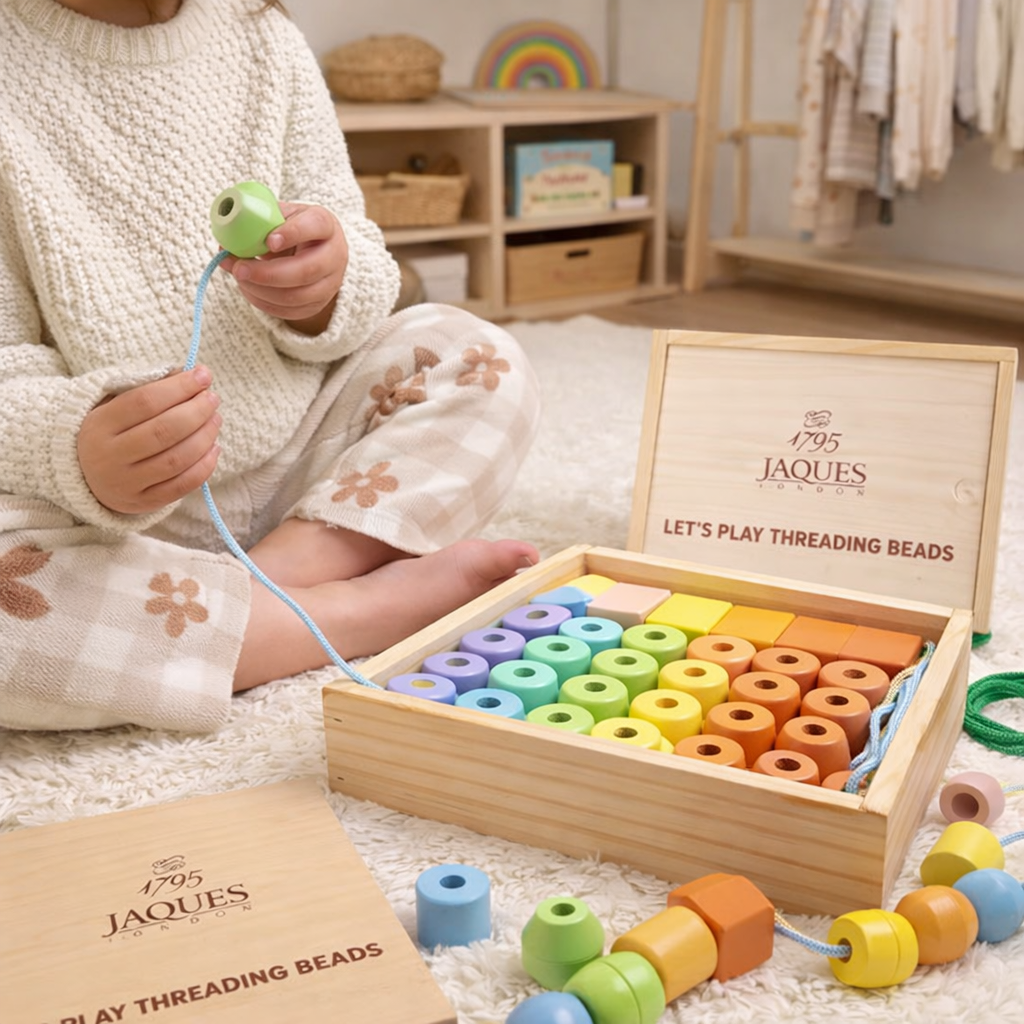
If you’re looking for a beautifully finished keepsake that will last for years, this Jaques of London – Wooden Threading Bead Set is another lovely option.
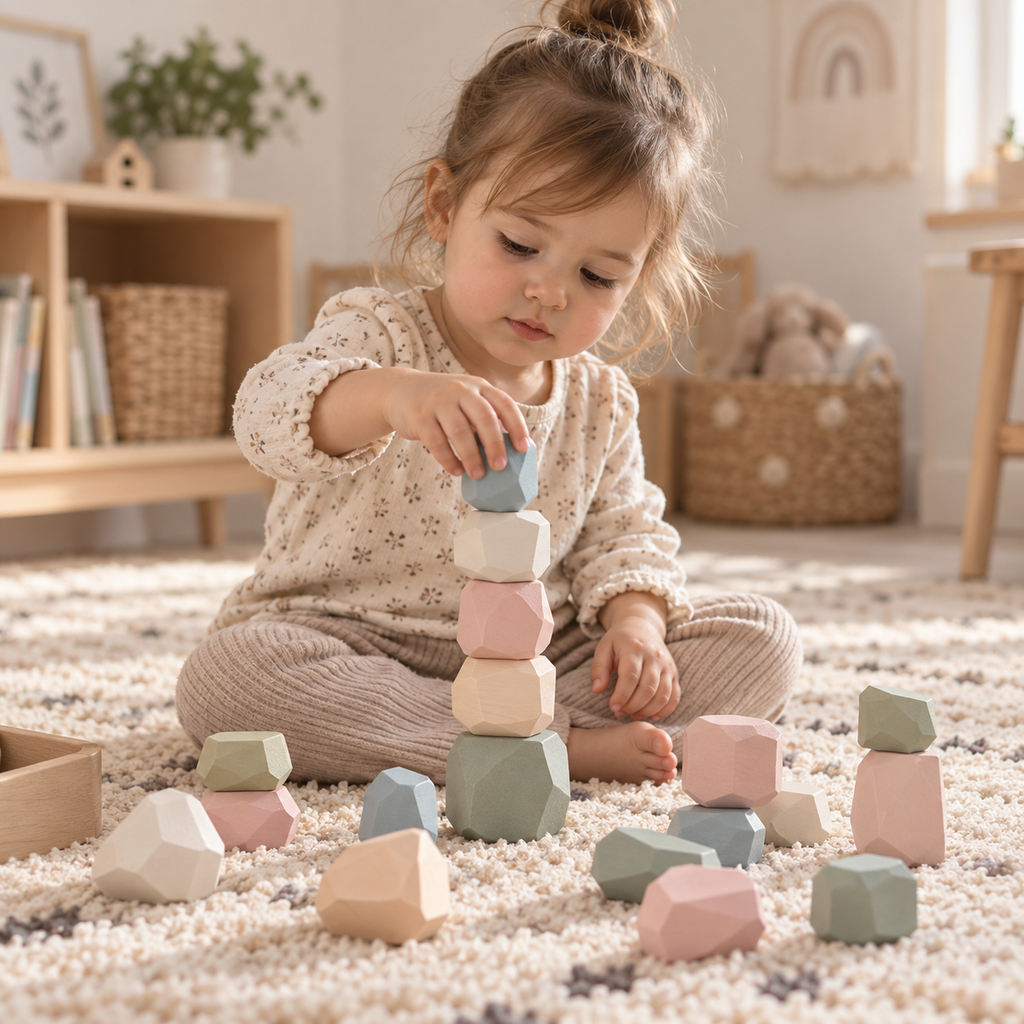
8. Wooden Balancing Stones
A beautifully simple building toy that turns stacking into a surprisingly absorbing challenge.
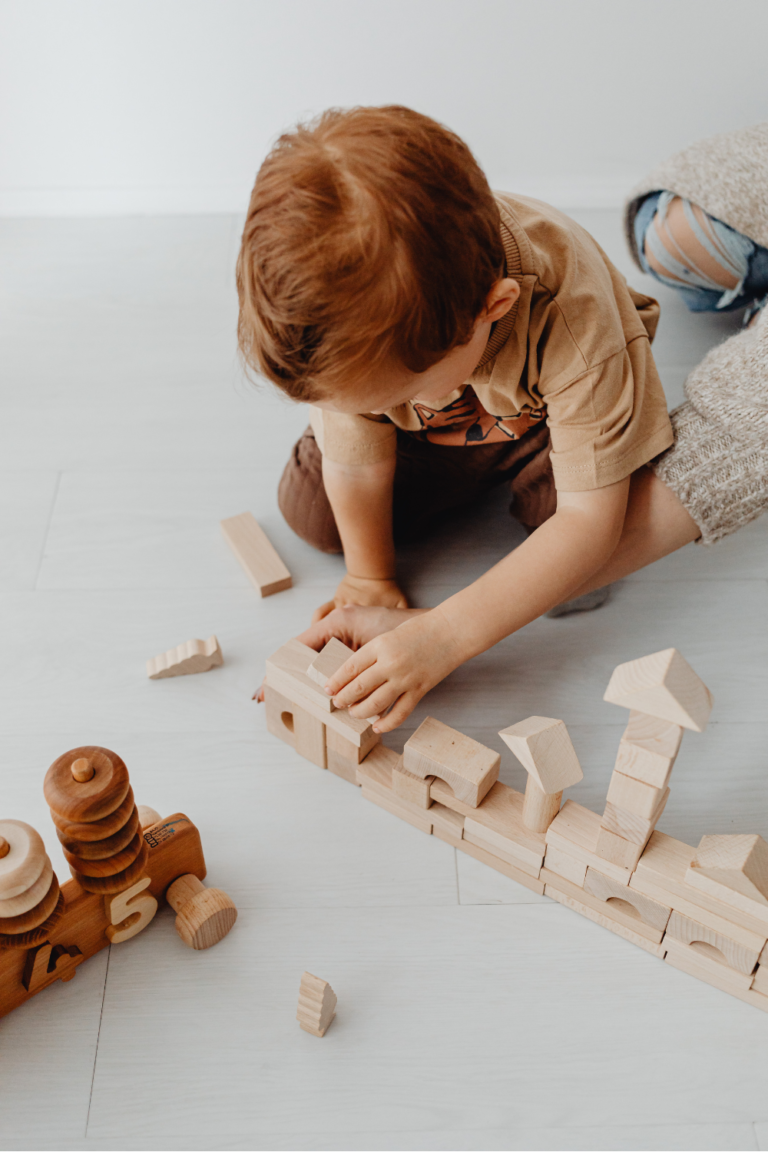
Unlike traditional blocks, these wooden balancing stones have irregular, faceted shapes, so children have to experiment with different sides and positions to work out how they fit together. Two-year-olds can stack them into small towers, arrange them in different ways or simply explore which pieces will balance.
Why we like it: There’s no single correct way to play, but stacking the uneven shapes naturally encourages children to slow down, concentrate and adjust when something falls. The muted colours are lovely too — interesting without adding letters, numbers or pictures that dictate how the pieces should be used.
Worth knowing: Balancing these shapes can be trickier than stacking ordinary blocks, so younger two-year-olds may begin with just a few pieces before attempting bigger structures.
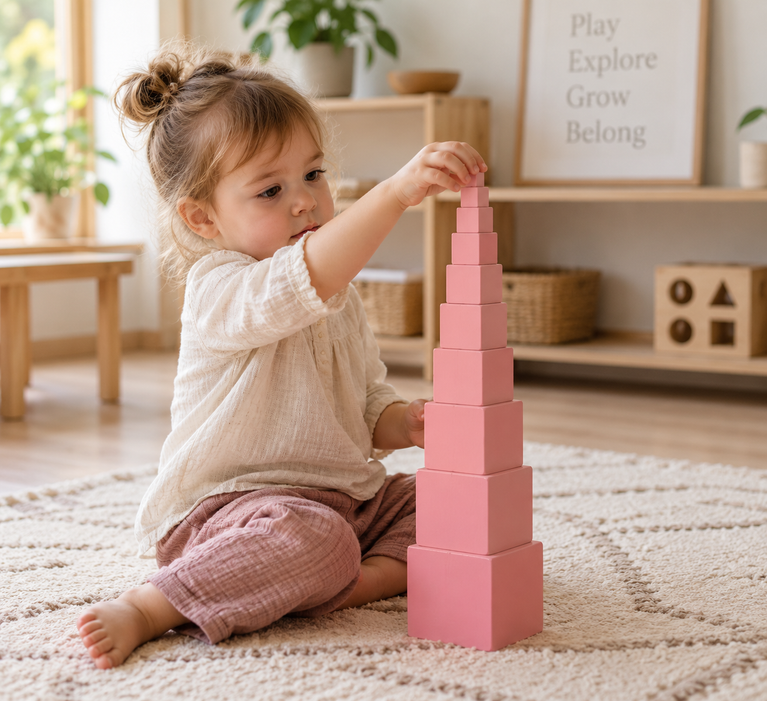
9. Wooden Stacking Boxes
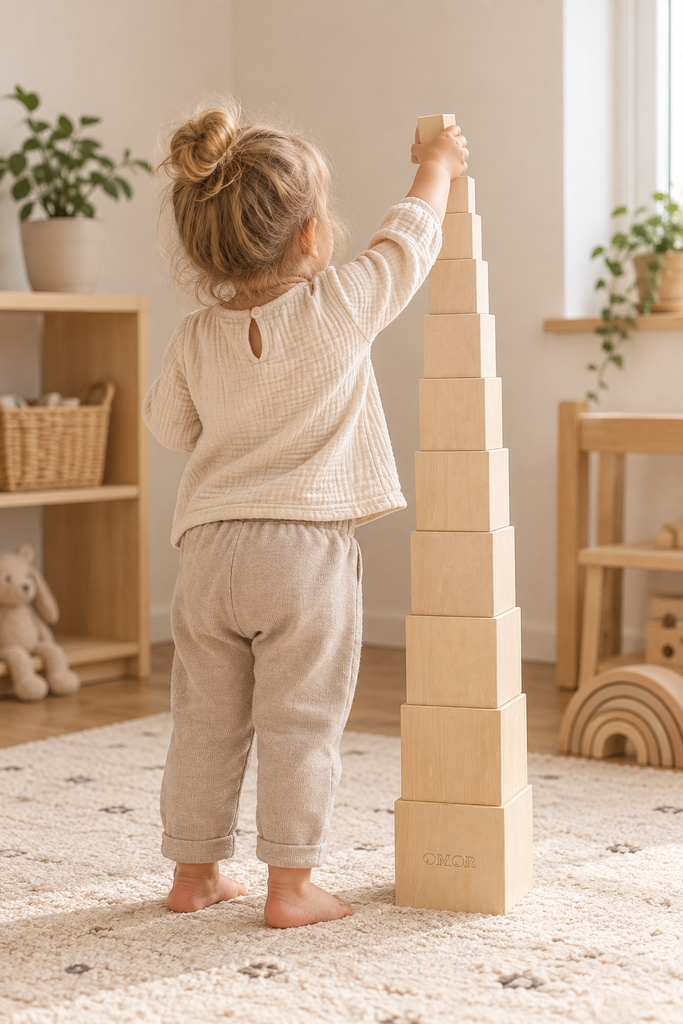
A wonderfully simple challenge that can keep little hands busy for surprisingly long stretches.
These graduated wooden cubes can be stacked into an impressively tall tower or nested neatly inside one another, giving children two different ways to explore size and order. Working out which cube comes next encourages problem-solving, concentration and coordination.
Why we like it: There are no instructions or distractions — just a satisfying challenge children can return to independently, whether they’re building upwards, nesting the cubes together or knocking everything down to start again.
View Wooden Stacking & Nesting Boxes
Creating an Environment That Supports Play
The toys themselves are only part of it.
Toddlers often play more calmly and independently when their environment feels simple and manageable too — a small number of toys available at once, low shelves they can access themselves, and enough uninterrupted time to settle deeply into play without constant direction.
In many homes, fewer available toys actually leads to longer and more focused play.
And often, the toys that hold attention best are not necessarily Montessori-branded ones. Simple, open-ended toys that toddlers can use independently usually work beautifully on their own, especially when they are not overly noisy, complicated or overstimulating.
A calm play space can help support this too:
→ Montessori Calm Corner for Toddlers
And if you are rotating toys, keeping the setup simple usually works best. Too many toys, toys that feel slightly too advanced, or rotating everything too quickly can sometimes make it harder for toddlers to settle into play naturally.
→ Best Montessori Toys for 1 Year Olds That Last
Final Thoughts
At this age, toddlers rarely need more toys. More often, they need a calmer environment and a few thoughtful activities that match their stage of development.
In many cases, fewer available choices, simple open-ended toys and enough time to play without interruption naturally leads to longer, more focused play.
That is often why Montessori-style toys work so well at this age. They support concentration, repetition and independence without overwhelming toddlers with too much stimulation at once.
And usually, the toys children return to most are not the ones that do the most —
but the ones that allow the child to do more themselves.
Shopping on Amazon?
If you’re not already a Prime member, you can check whether you’re eligible for a free 30-day trial and enjoy Prime delivery on millions of eligible items.
FAQs
What are the best Montessori toys for 2 year olds?
The best Montessori toys for 2 year olds are usually simple, hands-on activities that match a child’s stage of development without overwhelming them.
Practical life tools, wooden puzzles, building blocks and sorting activities often work especially well at this age because they support concentration, repetition and growing independence through play.
How many toys should a 2 year old have at once?
Most toddlers play more calmly with a smaller number of toys available at once — often around 6–10.
Too many choices can sometimes make it harder for toddlers to focus deeply on play. Rotating toys every week or two usually helps keep the environment feeling calmer and more engaging without constantly adding new toys.
How do I encourage independent play in a 2 year old?
Independent play often becomes easier when the environment feels simple and manageable.
Low shelves, limited toy choices, uninterrupted play time and open-ended toys can all help toddlers settle more deeply into play without needing constant direction.
Are Montessori toys worth it for 2 year olds?
Montessori-style toys can work very well at this age because they are designed to support independence, concentration and hands-on learning in a calmer, less overstimulating way.
But they do not need to be expensive or specifically Montessori-branded. Many simple household objects and everyday toys can support this kind of play beautifully too.
Why does my 2 year old get bored with toys so quickly?
This often happens when toys feel either too easy, too overwhelming or there are simply too many choices available at once.
At this age, toddlers usually stay engaged longest when activities offer just enough challenge while still feeling manageable and repetitive.
What toys keep a 2 year old busy the longest?
Simple, repetitive activities often hold attention longest at this age.
Building blocks, puzzles, practical life activities and sorting toys tend to work especially well because toddlers can repeat them again and again while slowly building confidence and concentration through play.
Do 2 year olds need educational toys?
Not necessarily.
At this age, toddlers learn most effectively through hands-on play, movement, repetition and everyday experiences. Simple toys that encourage problem-solving and independent exploration are often far more engaging than complex electronic toys.
Are wooden toys better for 2 year olds?
Wooden toys are often popular because they tend to feel simpler, calmer and less overstimulating than many modern plastic toys.
But the material itself matters less than how the toy is used. Even very simple household objects can become meaningful play tools when they support concentration, movement and independence.
How often should I rotate toys for a 2 year old?
Many families find that rotating toys every 1–2 weeks helps keep play feeling fresh without overwhelming toddlers with too many choices at once.
If toys are being ignored or play starts feeling chaotic, simplifying the environment often helps more than adding something new.
You Might Also Find Helpful